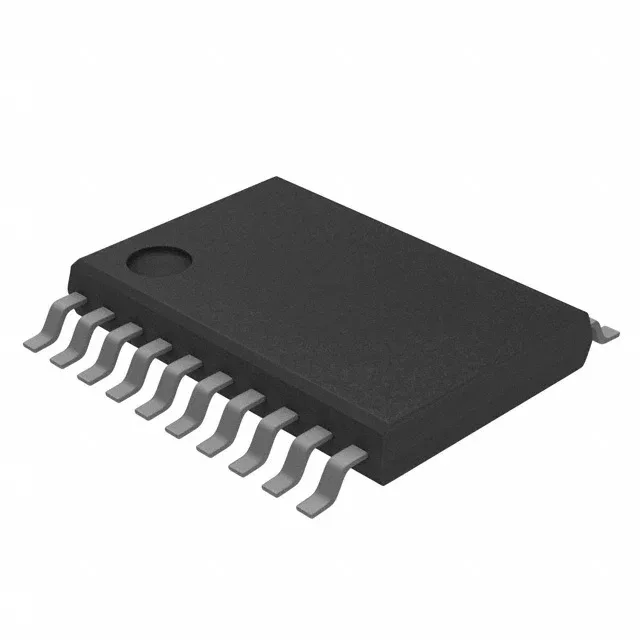
16 MHz CPU, 4 KB Flash — what this buys you
This is the entry-level density tier in the G2xx line — enough for a single sensor node, a basic PWM controller, or a LIN-bus slave that polls a few inputs and drives a relay. The 16-bit RISC core draws microamps in standby, which is the whole point of the MSP430 architecture: you trade throughput for battery life.
256 bytes RAM — plan your stack carefully
256 x 8 RAM is tight. A single UART buffer of 64 bytes eats a quarter of it. If the application needs any significant call stack, local variables, or interrupt nesting, the firmware engineer will be counting bytes. This part is not for data logging, protocol stacks, or anything that buffers more than a few dozen bytes. It fits a state machine that reads an ADC, checks a threshold, and toggles a GPIO.
The internal oscillator means no external crystal is needed for the core clock, saving two pins and a couple of passives. Brown-out detect and the watchdog timer are built in, so the reset circuit can be minimal.
It is not automotive-qualified (no AEC-Q100 marking), so it stays out of under-hood or chassis-mounted applications unless the customer accepts non-automotive-grade risk.