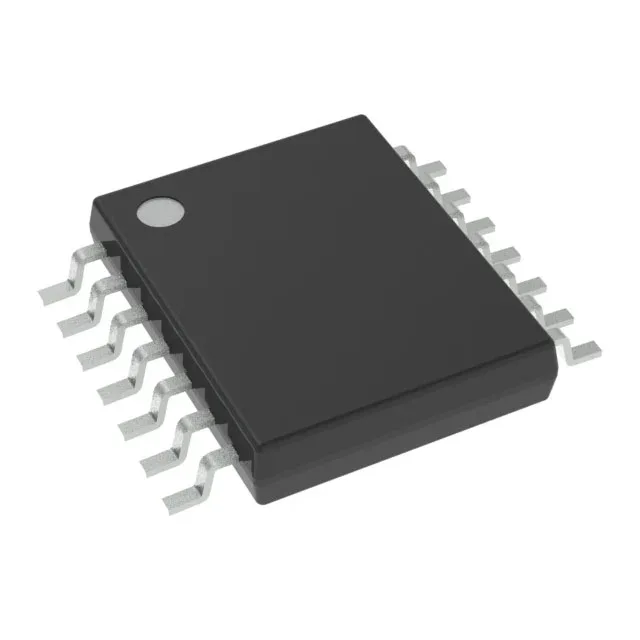
Active 16-bit MCU with 2 KB Flash for low-power control
The MSP430G2252IPW14R: It runs at 16 MHz and carries 2 KB of Flash program memory with 256 x 8 bytes of RAM — enough for small sensor nodes, basic motor control, or human-interface tasks. The part integrates an 8-channel 10-bit ADC, a Brown-out Detect/Reset, POR, PWM timer, WDT, and a USI module supporting I²C and SPI.
16 MHz core — enough for most control loops
The 16 MHz clock rate is typical for the MSP430G2xx value line. For a 16-bit RISC core, this translates to about 16 MIPS. It handles periodic sensor reads, PWM updates at tens of kHz, and communication protocol framing without breaking a sweat. If your application needs heavier DSP or floating-point, you'd step up to the MSP430F5xx series — but for a simple control loop with a few analog inputs, this part keeps the BOM lean and the power draw low.
256 bytes of RAM — budget accordingly
The 256 x 8 RAM is tight. It limits stack depth, buffer sizes, and the number of active variables. You'll want to map out your memory usage early — a few global structures plus a modest call tree can fill it quickly. If your firmware uses a real-time OS or needs a large data buffer, consider the higher-RAM variants in the same family. For a single-threaded polling loop with a handful of sensor readings, it's adequate.
Package and footprint: 14-TSSOP
Housed in a 14-TSSOP (4.40 mm width, 0.65 mm pitch), this is a surface-mount part that sits comfortably on a two-layer board. The 10 available I/O pins cover a few sensor inputs, a PWM output, and an I²C or SPI bus. No exposed thermal pad — dissipation is modest at these clock speeds.