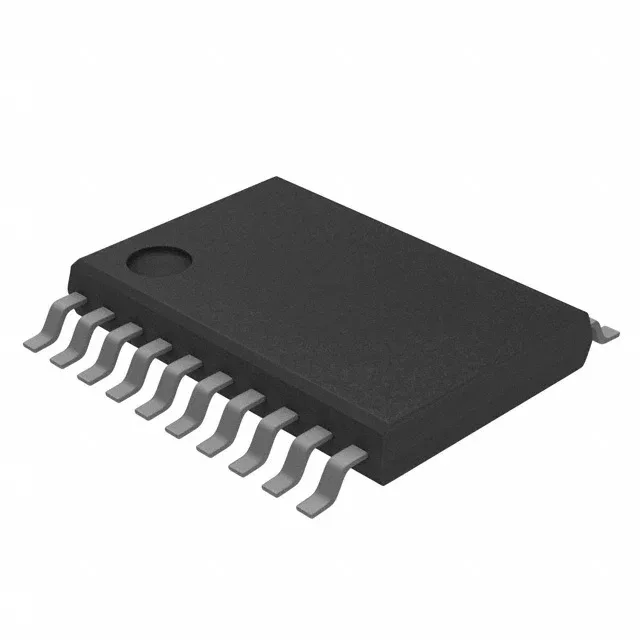
What this 16-bit MCU brings to a control board
It carries 2 KB of program Flash and 256 bytes of RAM — enough for small sensor-to-communication tasks like reading a temperature probe and reporting over I²C or UART.
At 16 MHz the CPU16 can execute a single-cycle multiply in one clock, so a 10-bit ADC read and a UART byte transmit fit inside a 62.5 ns window. That is fast enough for 100 kHz sensor polling loops or a 20 kHz PWM update from the on-chip timer.
2 KB Flash, 256 B RAM — sizing the firmware envelope
With 2 KB of Flash and 256 bytes of RAM, the firmware budget is tight. That is enough for a simple state machine with a few lookup tables, a UART command parser, and an I²C driver for a sensor. It will not hold a real-time operating system or a TCP/IP stack. Plan the code size before committing the BOM — the MSP430G2xx family includes pin-compatible parts with up to 8 KB Flash if the application grows.
The brown-out detect resets the core cleanly when the battery sags below the operating threshold.
20-TSSOP package — board-fit notes
The 20-TSSOP body is 4.4 mm wide with a 0.65 mm pitch — a compact footprint for space-constrained designs. It is a surface-mount package, so reflow soldering is standard. The supplier device package is 20-TSSOP; the package / case is 20-TSSOP (0.173", 4.40 mm Width). No exposed thermal pad, so heat dissipation is through the leads — keep the ambient load within the 85°C ceiling.