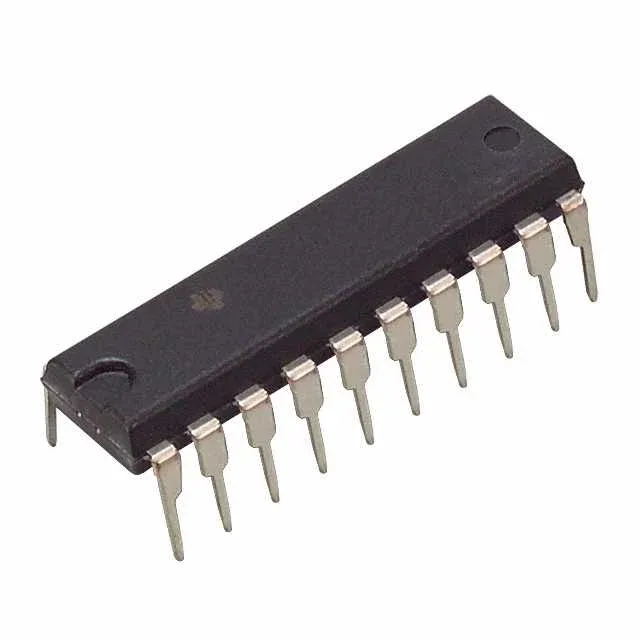
Texas Instruments MSP430G2233IN20 — Microcontrollers & Processors (MCU / MPU / DSP)

Texas Instruments MSP430G2233IN20 MCU, 16 MHz, 2 KB Flash

MPNMSP430G2233IN20
Active

Texas Instruments MSP430G2xx series 16-bit microcontroller, MSP430G2233IN20, 16 MHz core, 2 KB flash, 256 x 8 RAM, 20-DIP package, industrial temp.

$2.7500Ref. price · indicative, final on quote
Packaging20-DIP (0.300", 7.62mm)
RoHSROHS3 Compliant
SeriesMSP430G2xx
Independent supplier — new & surplus stockAuthenticity-screened · ESD-safe packingListing updated Aug 2026

Specifications

MSP430G2233IN20 specifications
ParameterValue
SeriesMSP430G2xx
MountingThrough Hole
Oscillator typeInternal
Program memory typeFLASH
Voltage - supply (Vcc (Vdd))1.8V ~ 3.6V
Operating temperature-40°C~85°C(TA)
Speed16MHz
PackageTube
RAM size256 x 8
Core size16-Bit
PeripheralsBrown-out Detect/Reset, PWM, WDT
ConnectivityI²C, IrDA, LINbus, SCI, SPI, UART/USART
Number of i (O)16
Core processorMSP430 CPU16
Case20-DIP (0.300\", 7.62mm)
Data convertersA/D 8x10b
Program memory size2KB (2K x 8)

Product details

16 MHz MSP430 CPU16 with 2 KB flash in a through-hole DIP

The MSP430G2233IN20 is a 16-bit microcontroller from Texas Instruments' MSP430G2xx series, built around the MSP430 CPU16 core clocked at 16 MHz. It carries 2 KB of program flash and 256 bytes of RAM — enough memory for small sensor-processing loops, simple control logic, or a single-protocol communication stack, but tight for a full RTOS or multi-protocol gateway. The 20-pin DIP package (0.300-inch width) is through-hole mounted, which makes it breadboard-friendly and easy to hand-solder in prototyping or low-volume production, but it occupies more board area than a surface-mount QFN or TSSOP alternative.

Peripheral set and connectivity for sensor and actuator interfaces

Sixteen general-purpose I/O pins are available, along with an 8-channel 10-bit analog-to-digital converter — enough to read several analog sensors (thermistors, potentiometers, current shunts) without an external multiplexer. The ADC resolution is 10 bits, giving 1024 steps across the reference voltage. Serial connectivity covers I²C, SPI, and UART/USART, plus IrDA and LINbus — the I²C and SPI buses handle common sensor modules (temperature, humidity, accelerometer), while the UART talks to a host controller or a Bluetooth module. The LINbus support is useful for automotive body-control nodes. The brown-out reset holds the MCU in reset until the supply rail is stable — critical for battery-powered or energy-harvesting designs where the voltage can sag during startup. The watchdog timer guards against firmware lock-ups in unattended operation.

The 20-PDIP package has a seated height of about 5 mm above the board — the plastic body is standard DIP profile, no special handling needed.

Frequently asked questions

What is the MSP430G2233IN20's clock speed and memory size?

The core runs at 16 MHz with 2 KB of program flash and 256 bytes of RAM. That is a small memory footprint — enough for a single sensor loop or a simple communication protocol, but not for a full RTOS or large data buffers.

What packages and mounting options are available for the MSP430G2233IN20?

This specific order code is the 20-pin DIP (0.300-inch, 7.62 mm pitch) through-hole package. It fits standard breadboards and DIP sockets. Surface-mount variants of the same MCU exist in TSSOP and QFN packages under different order codes.

Can the MSP430G2233IN20 replace the MSP430G2132IPW14R in an existing design?

No — the MSP430G2132IPW14R is a surface-mount TSSOP-14 package with 10 I/O, while the MSP430G2233IN20 is a through-hole DIP-20 with 16 I/O. The pinout, footprint, and mounting method are different; a board layout change is required.