On-chip peripherals include a 10-bit ADC with 8 channels, I²C and SPI serial interfaces, a PWM timer, and a watchdog timer with brown-out reset. This part is aimed at battery-powered or energy-harvesting applications where every microamp matters — think portable medical monitors, wireless sensor nodes, handheld instruments, and building-automation controllers.
Memory and peripheral budget — what fits
With 2 KB of Flash and 128 bytes of RAM, firmware must be tight. A typical I²C temperature sensor driver with a PID loop and UART debug output fits in about 1.2 KB of Flash, leaving room for a bootloader or calibration table. The 128-byte RAM ceiling means no large data buffers — plan for register-based or EEPROM-emulated storage. The 10-bit ADC resolves 3.3 V to about 3.2 mV per count, adequate for thermistor or potentiometer readout but not for precision load-cell measurements.
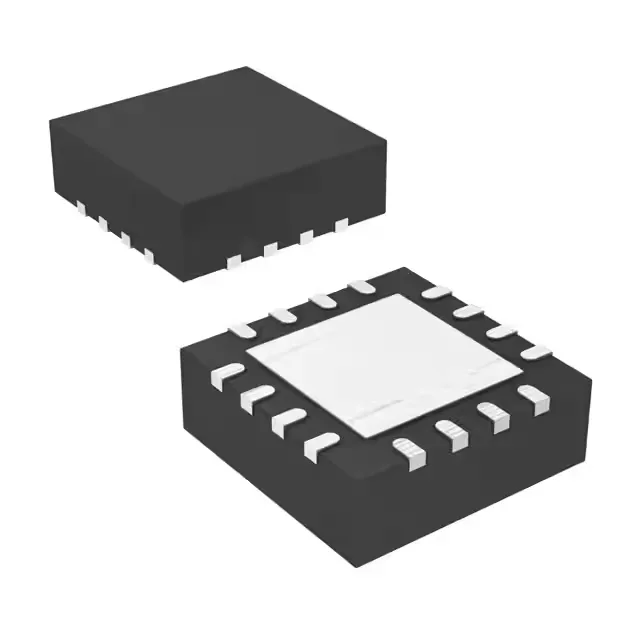
Housed in a 16-pin QFN with an exposed thermal pad (4x4 mm body), this package demands a solid ground-plane connection under the pad. The datasheet recommends a 2x2 via array in the pad for thermal transfer — skip the vias and the junction temperature climbs quickly above 85°C ambient at continuous 10 mA I/O loads. All 10 GPIOs are 5 V tolerant on this variant, so level shifting is not needed when interfacing to 5 V logic or sensors.