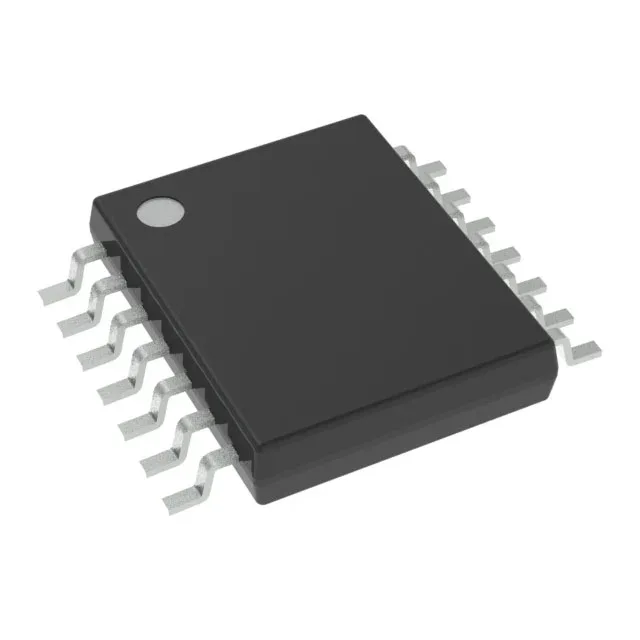
Connectivity is handled through I²C and SPI interfaces, with 10 general-purpose I/O lines.
Obsolete — planning the BOM transition
The Q1 suffix in the order code denotes automotive-grade qualification per AEC-Q100. This part was originally intended for under-hood or cabin-domain automotive electronics where reliability screening, extended temperature range, and qualification documentation are required. For a buyer sourcing this obsolete part for an automotive BOM line, the AEC-Q100 marking is critical — it confirms the die and assembly lot met automotive stress tests. The non-Q1 variant (MSP430G2221IPW4) lacks this qualification and would not be a drop-in replacement for an automotive-specified line without a full requalification.
16 MHz core and 2 KB Flash — sizing the firmware
The 16 MHz CPU speed is typical for the MSP430G2 value line, sufficient for simple control loops, sensor polling, and communication tasks over I²C or SPI. The 2 KB Flash and 128 bytes of RAM are tight — firmware must be lean, and the 128-byte RAM limits stack depth and buffering. This part was commonly used in basic automotive modules like window lift controllers, seat position sensors, or LIN slave nodes where code size and pin count are constrained.