16 MHz 16-bit core with 2 KB Flash — what fits in that envelope
2 KB Flash and 256 B RAM — the memory budget is the real spec
The 2 KB program memory (2K x 8) and 256 x 8 RAM are the tightest constraints on this part. That Flash footprint fits a single-function state machine, a LIN slave stack with a few configuration parameters, or a simple sensor read-and-transmit loop.
Package and footprint — 32-VQFN with exposed pad
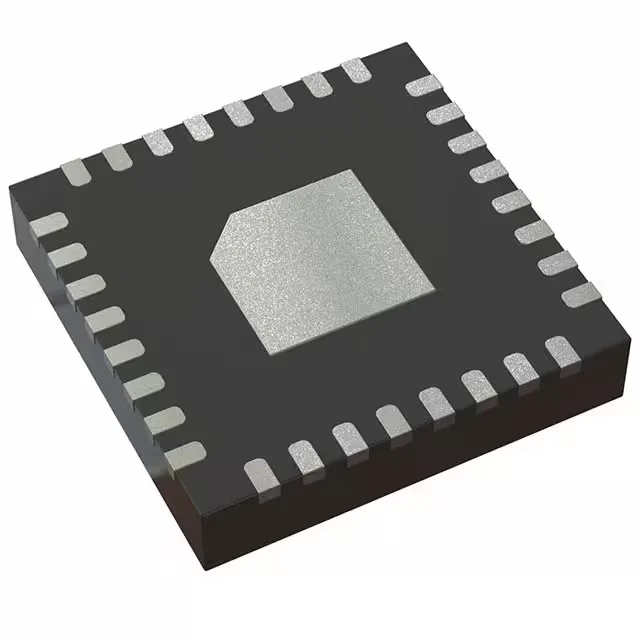
The MSP430G2213IRHB32T ships in a 32-VFQFN exposed-pad package (supplier device package 32-VQFN, 5x5 mm). The QFN footprint requires a solder-paste stencil with a center-pad aperture; without it the part may float during reflow. The small 5x5 mm body suits space-constrained designs but limits manual rework; hot-air removal with a preheat plate is the usual method.
Supply voltage and 3.3 V compatibility
At 3.3 V the core runs at full 16 MHz with zero wait states from Flash, per the MSP430G2xx datasheet timing. The I/O pins are 5 V tolerant only when the port is configured as input — driving an output above Vcc forward-biases the ESD diode. For mixed-voltage systems with 5 V peripherals, level translation on output lines is required. The internal oscillator is factory-calibrated to ±1% at 25°C, so no external crystal is needed for UART baud-rate generation at common rates up to 115200 bps.
The F280041PZQR is a different architecture (C2000 32-bit C28x core at 100 MHz) and is not a functional substitute — it targets a different performance tier and application domain.