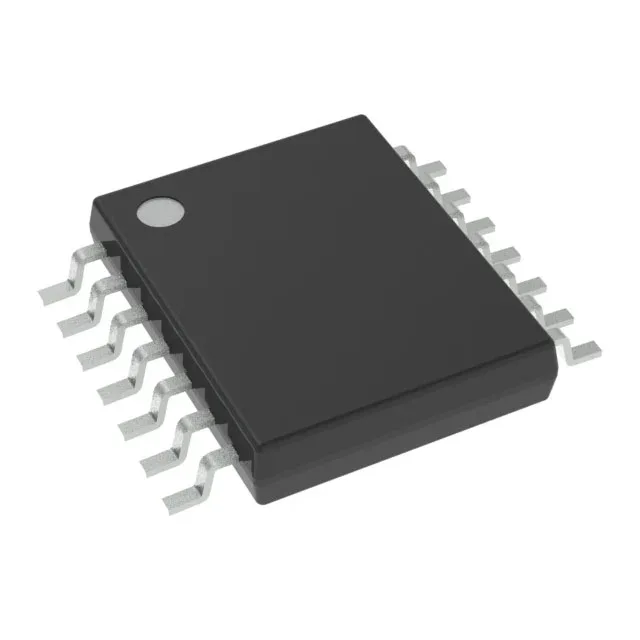
16 MHz MSP430 core with 2 KB Flash — sizing the firmware envelope
The MSP430G2212IPW14R: The 256 x 8 RAM, at 256 bytes, is the binding constraint for data buffers and call stack depth; any I²C or SPI transaction buffer needs to be sized carefully to avoid overflow. Ten I/O pins are brought out in the 14-TSSOP package. With the USI module handling I²C and SPI in hardware, two pins are consumed for the serial bus, leaving eight GPIOs for buttons, LEDs, interrupts, or control signals. The Brown-out Detect/Reset and POR peripherals are on by default, which is a practical safeguard against brownout corruption on battery-powered boards.
Industrial temperature rating and what it allows
The Flash retention is specified across the full temperature range by TI's usual MSP430 practice, but the 256 B RAM is not ECC-protected — single-event upsets are a risk in high-altitude or rad-heavy environments, though unlikely in typical industrial use.
No last-time-buy has been announced, and the MSP430G2xx series remains a current production line. For BOM planning, the active status removes the urgency to qualify a drop-in replacement today, though the 2 KB Flash ceiling means a future firmware growth will force a move to a higher-density MSP430G2xx variant.
14-TSSOP footprint and rework considerations
Cut Tape (CT) is also available for prototype quantities.