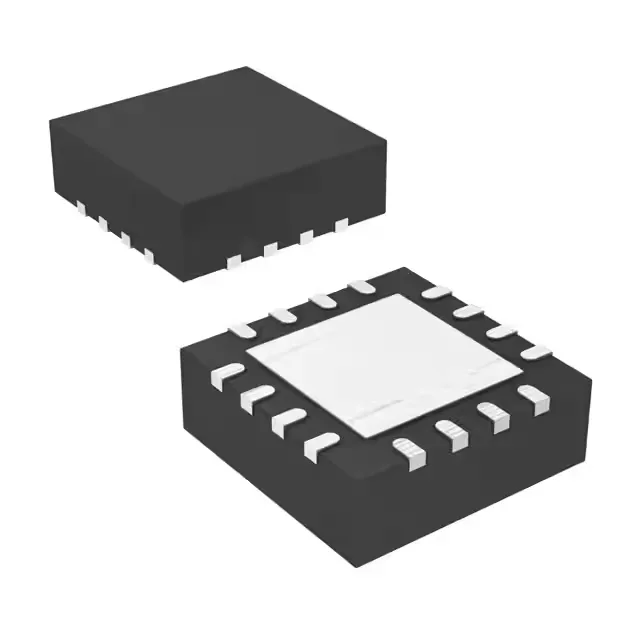
Active automotive MCU for control and sensor applications
The 16-pin QFN package with exposed pad keeps the board footprint small while the thermal pad helps dissipate heat in confined enclosures.
AEC-Q100 qualification — what it buys you
This part carries AEC-Q100 stress qualification, meaning it has passed the full suite of automotive-grade reliability tests: extended temperature cycling, high-temperature operating life (HTOL), and electrostatic discharge (ESD) robustness. For a BOM destined for under-hood or cabin electronics, that qualification eliminates the need for additional component-level screening and simplifies the PPAP submission.
2 KB Flash — sizing the firmware budget
The 2 KB of Flash (2K x 8) is the firm limit for compiled code. This suits a single-purpose control task — a LIN slave node, a window-lift controller, a seat-position sensor — where the application fits in roughly 1.5 KB after the bootloader and interrupt vector table. If the firmware needs a CAN stack or a state machine with multiple thresholds, the next step up in the MSP430G2 series (4 KB or 8 KB variants) is the practical fallback without changing the pinout.
The 16 MHz clock is available across the full voltage range, so performance does not degrade at the low end. Brown-out detect and POR are integrated peripherals, reducing external supervisor IC count on the board.