What this 16-bit MCU brings to a low-power BOM
The MSP430G2201IRSA16T: It runs at up to 16MHz and carries 2KB of Flash program memory with 128 bytes of RAM — a combination sized for simple control loops, sensor readout, or basic human-interface tasks where code space is tight and every microamp matters. The supply range spans 1.8V to 3.6V, which lets it run from a single lithium cell or a regulated 3.3V rail without an extra LDO. The internal oscillator eliminates the crystal for cost-sensitive builds.
2KB Flash and 128B RAM — sizing the firmware budget
With 2KB of Flash and 128 bytes of RAM, this part is not for a complex protocol stack or a GUI. It fits applications where the firmware fits in a few hundred lines of C — a temperature sensor reporting over a single-wire interface, a PWM fan controller, or a battery-monitor state machine. The 128 x 8 RAM arrangement means data variables and stack share a single 128-byte bank; watch the linker map for stack overflow if you add interrupt nesting. The 16-bit core handles 16-bit arithmetic and addressing natively. At 16MHz the core can service a control loop with margin.
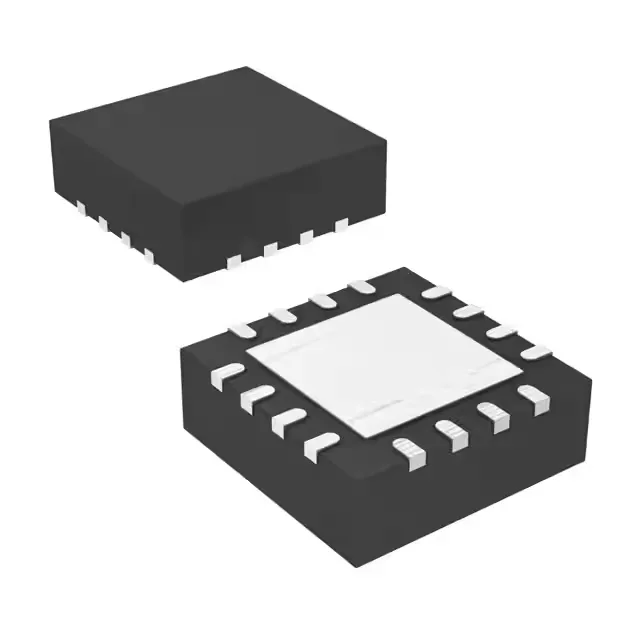
The 16-VQFN package with exposed pad (4x4 mm body) is a compact surface-mount option for space-constrained PCBs. The 10 I/O lines are available on the package periphery. Mounting is surface-mount only; the QFN package requires a reflow profile compatible with the board's solder paste. No through-hole variant exists for this order code.