What this MSP430G2152IRSA16R brings to a low-power control design
An internal oscillator is on-die, so no external clock components are needed for basic operation.
With 1 KB of Flash, the firmware image must be lean — think a few hundred lines of C for a temperature monitor, a simple PWM fan controller, or a battery-charge state machine. The 128 bytes of RAM handle a small call stack and a handful of variables; any data logging or buffering beyond a few bytes will overflow. This part is not for complex protocol stacks or multi-tasking kernels. It fits where an 8-bit MCU might go but brings the 16-bit MSP430 architecture's lower active power and better C-code efficiency.
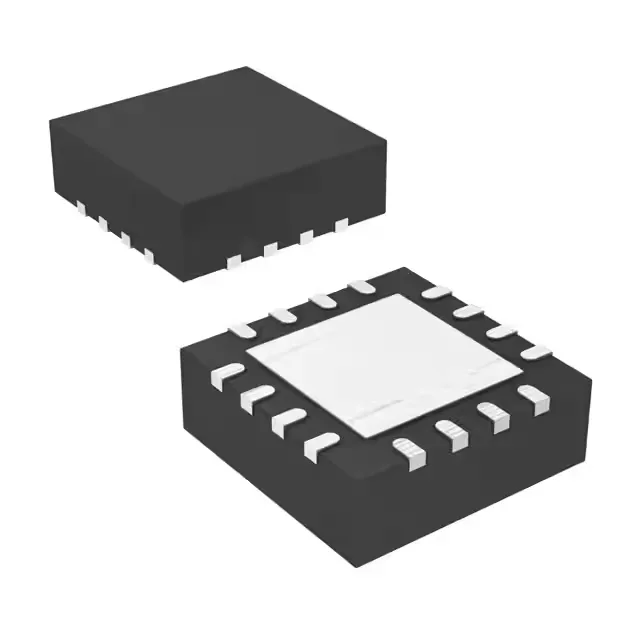
Housed in a 16-pin VQFN with exposed pad (4x4 mm body), this package is compact but reworkable with a hot-air station if you pre-bake per MSL requirements.
For dual-sourcing resilience, the MSP430G2xx family includes several pin-compatible density variants — the MSP430G2231 (2 KB Flash) and MSP430G2452 (8 KB Flash) share the same 16-QFN footprint and peripheral set, allowing a BOM upgrade without a board spin if the firmware grows.