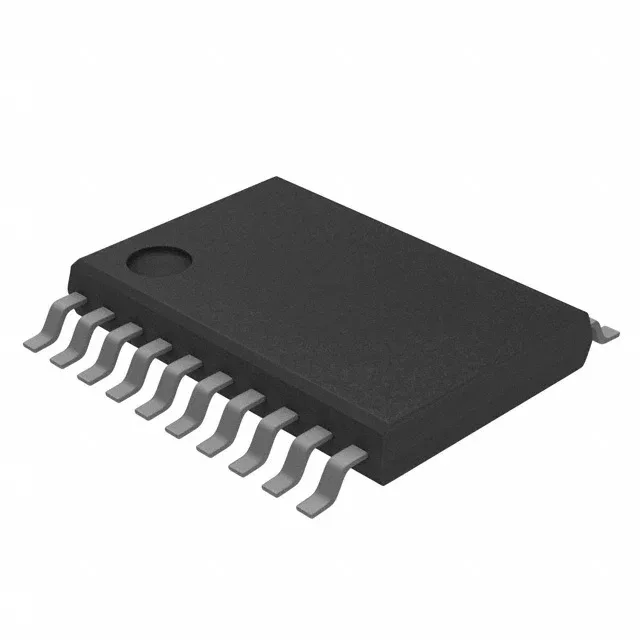
Texas Instruments MSP430G2152IPW20 — Microcontrollers & Processors (MCU / MPU / DSP)

Texas Instruments MSP430G2152IPW20 16-bit MCU, 16 MHz

MPNMSP430G2152IPW20
Active

Texas Instruments MSP430G2xx series, MSP430G2152IPW20, 16-bit MCU, 16 MHz, 1 KB Flash, 128 x 8 RAM, I²C/SPI/USI, 8x10b ADC, 20-TSSOP, -40°C to 85°C.

$1.9600Ref. price · indicative, final on quote
Packaging20-TSSOP (0.173", 4.40mm Width)
RoHSROHS3 Compliant
SeriesMSP430G2xx
Independent supplier — new & surplus stockAuthenticity-screened · ESD-safe packingListing updated Aug 2026

Specifications

MSP430G2152IPW20 specifications
ParameterValue
SeriesMSP430G2xx
MountingSurface Mount
Oscillator typeInternal
Program memory typeFLASH
Voltage - supply (Vcc (Vdd))1.8V ~ 3.6V
Operating temperature-40°C~85°C(TA)
Speed16MHz
PackageTube
RAM size128 x 8
Core size16-Bit
PeripheralsBrown-out Detect/Reset, DMA, POR, PWM, WDT
ConnectivityI²C, SPI, USI
Number of i (O)16
Core processorMSP430 CPU16
Case20-TSSOP (0.173\", 4.40mm Width)
Data convertersA/D 8x10b
Program memory size1KB (1K x 8)

Product details

The 1 KB Flash is the hard limit for firmware; if your application already fits in 512 bytes, this part leaves headroom; if you're pushing 2 KB, look at the MSP430G2153 or G2231 in the same footprint.

Connectivity runs through I²C, SPI, and the Universal Serial Interface (USI), a flexible serial module that can be configured as either UART or SPI in software.

20-TSSOP package and supply range

Housed in a 20-pin TSSOP (4.40 mm width), the package is compact enough for space-constrained boards but still hand-solderable with a fine tip and steady hands — the 0.65 mm pitch is manageable for rework.

Frequently asked questions

What is the difference between MSP430G2152IPW20 and MSP430G2153IPW20?

The MSP430G2153IPW20 is a pin-compatible sibling in the same MSP430G2xx family that doubles the program memory to 2 KB Flash while keeping the same 16 MHz core, 128 B RAM, and peripheral set. If your firmware exceeds 1 KB, the G2153 is the natural step-up without changing the board layout.