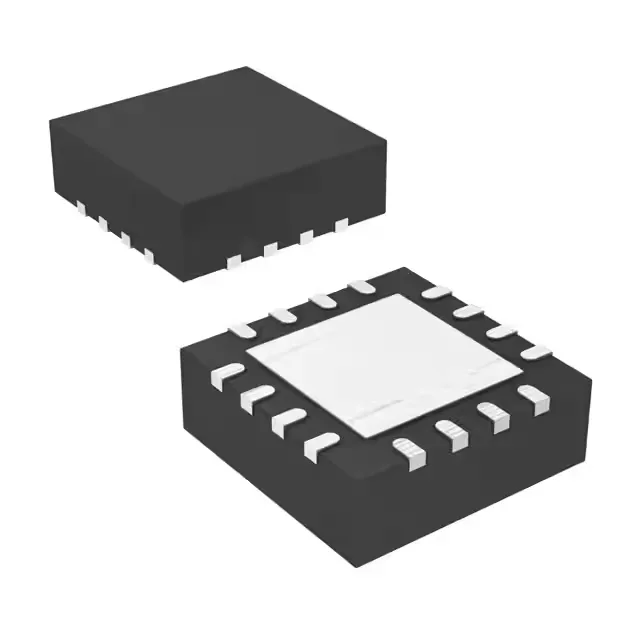
Small-footprint 16-bit MCU for low-power sensing and control
The part runs at 16 MHz and includes an internal oscillator, so no external clock components are needed. Typical applications include portable sensor nodes, simple control loops, and human-interface devices where low power draw and small board area are the priorities.
1 KB Flash and 128 B RAM — sizing the firmware budget
With 1 KB of Flash and 128 bytes of RAM, this MCU is sized for single-purpose firmware — a simple state machine, a sensor readout with I²C or SPI, a PWM output, or a watchdog-supervised loop. The 128 x 8 RAM (128 bytes) limits data buffering to a few variables; anything beyond a small lookup table or a short FIFO will overflow. If your application needs more than a few hundred instructions or a moderate data buffer, step up to the 2 KB or 4 KB Flash variants in the same MSP430G2xx family — they share the same footprint and peripheral set, so the board layout does not change.
I²C and SPI on a 10-I/O budget
The MSP430G2131IRSA16T provides I²C and SPI connectivity through its 10 general-purpose I/O pins. Both interfaces share the same physical pins, so you use one or the other — not both simultaneously — unless you bit-bang a second interface on remaining GPIO. The 10 I/O count includes the pins used for the serial interfaces, so a design that enables I²C or SPI loses two to three pins for the bus lines. Plan the pin allocation before layout: the remaining GPIO must cover any button inputs, LED outputs, or interrupt lines the application needs.