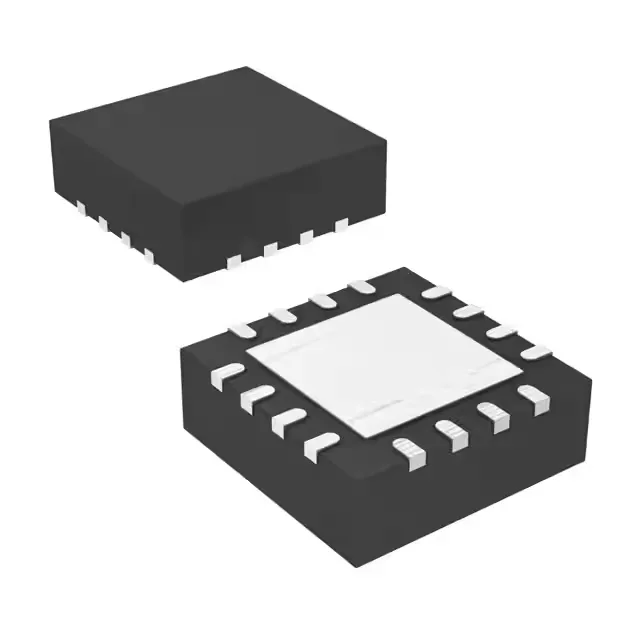
16 MHz, 1 KB Flash — the code budget sets the boundary
The MSP430G2111IRSA16T: That 1 KB program memory is the hard constraint — it fits a single control loop, a sensor read-and-transmit routine, or a simple state machine, but leaves no room for a scheduler or a protocol stack beyond a basic UART/I²C polled driver. The 128-byte RAM ceiling means the stack depth and any data buffer must be budgeted byte by byte. A nested interrupt with two levels and a 32-byte FIFO consumes most of it; plan the call tree before writing a line of C.
On-chip peripherals reduce BOM count
The integrated Brown-out Detect/Reset (BOR), Power-on Reset (POR), and Watchdog Timer (WDT) eliminate the need for an external supervisor IC in most low-power designs. A single PWM output is available for driving a small LED or a piezo buzzer directly from the GPIO. With only 10 I/O pins, the part suits applications that need a handful of digital inputs, one or two analog reads (via the comparator or ADC — note that no on-chip ADC is listed in the spec record), and a serial interface. The I/O count is the limiting factor for any multi-sensor or keypad matrix design.
Active production — no lifecycle risk for new builds
Texas Instruments lists the MSP430G2111IRSA16T as Active with no end-of-life notice. ROHS3 compliant, it carries no RoHS exemption expiry concerns.