At 16 MHz the CPU16 core delivers enough throughput for periodic sensor polling, serial communication, and PWM generation without external clock components. For timing-critical loops — like a 10 kHz control update — the 16 MHz clock provides 1600 instruction cycles per iteration, leaving headroom for interrupt service and housekeeping.
1 KB Flash / 128 B RAM — sizing the firmware
With 1 KB of Flash and 128 bytes of RAM, this part is sized for a single control task with a few configuration parameters — think a temperature monitor that logs min/max values, a simple timer-based relay controller, or a battery-voltage supervisor. The Flash endurance supports field reprogramming, but the 128 B RAM means no buffering for large data sets; any logging must write directly to Flash or use an external serial EEPROM.
NRND status — plan the BOM accordingly
It remains available for existing production runs and repairs, but TI advises against starting new projects with this order code. For a new design, a current MSP430G2xx or MSP430FRxx variant with larger memory and active status is the safer choice. Sourcing through independent distribution is straightforward — we quote against an RFQ, confirming availability and current pricing at the time of order.
16-QFN package — footprint and thermal
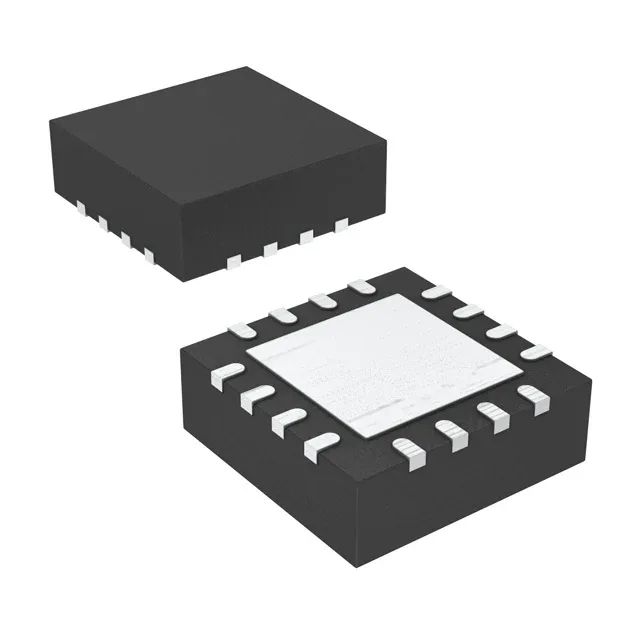
Housed in a 16-pin QFN with exposed pad (4x4 mm body), the MSP430G2101IRSA16T suits compact two-layer PCBs. Surface-mount reflow follows standard lead-free profiles; MSL rating is typical for this package class.