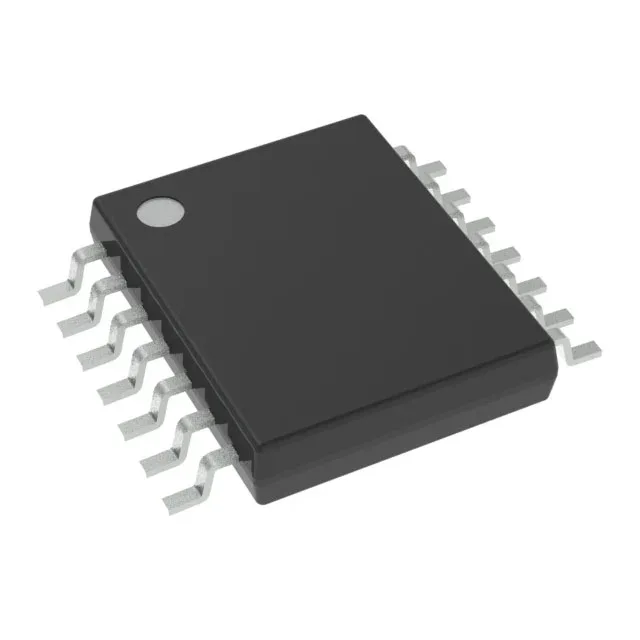
16-bit ultra-low-power MCU for sensor and control endpoints
The 10 general-purpose I/O pins, internal oscillator, and integrated peripherals (brown-out detect, POR, PWM, watchdog timer) let it handle standalone tasks without external clock or supervisor ICs.
Memory and peripheral budget — what fits in 1 KB Flash / 128 B RAM
With 1 KB of Flash and 128 bytes of RAM, this MCU targets applications where the firmware fits in a few hundred instructions and the data buffer is small — think reading a temperature sensor every second, toggling a relay, or sending a short UART frame. The 128 x 8 RAM is the working memory for stack and variables; a complex state machine or large lookup table will push past this limit. The 10 I/O pins, shared with the internal oscillator and debug interface, leave about 6 to 8 pins free for application use after accounting for SWD and the internal clock.
Supply range and power-tree simplification
The internal oscillator runs from this supply without an external crystal, and the brown-out reset holds the core in reset below the operating threshold — no external supervisor required. For a procurement decision, this means the power tree can be a simple battery or a single LDO, not a multi-rail PMIC.
The 14-pin count keeps the board trace routing simple — no dense BGA escape routing needed. Standard reflow profiles for TSSOP apply; MSL level is typical for this package class (verify on the reel label).
For dual-sourcing, evaluate other MSP430G2xx Flash variants in the same 14-TSSOP package.