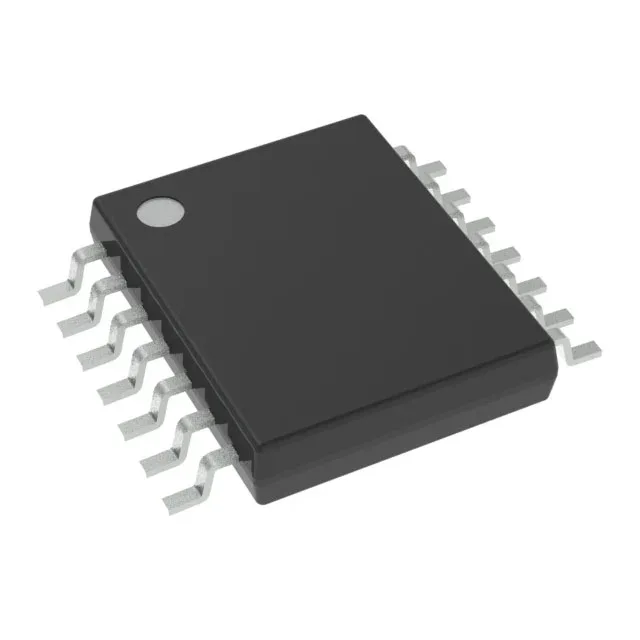
16 MHz MSP430 core with 1 KB Flash — what fits in that budget
With 10 general-purpose I/O lines, an internal oscillator, and built-in brown-out reset, POR, PWM, and watchdog timer peripherals, this part targets cost-sensitive, low-pin-count embedded applications where every byte of code and every microamp matters — think single-function sensor nodes, simple timer-based controllers, or battery-powered threshold monitors.
The 16 MHz clock is available across the full voltage range, though the flash wait-state configuration may need attention if you push the core speed at the low end of the supply.
128 bytes RAM — plan your stack and variables tightly
With 128 x 8 bits of RAM, the firmware engineer needs to account for every byte. The call stack, interrupt context save, and global variables all share this pool. Typical use cases are a few global flags, a small state machine, and a single-byte ADC result buffer. There is no room for a ring buffer or a multi-frame protocol stack. The 1 KB Flash similarly limits code to roughly 500–800 instructions of compiled C, so the application is best suited to a dedicated control loop or a simple polling routine rather than an RTOS or event-driven scheduler.
ROHS3 compliance is confirmed, which simplifies EU and global regulatory acceptance.