What this MSP430G2001IRSA16T brings to a BOM
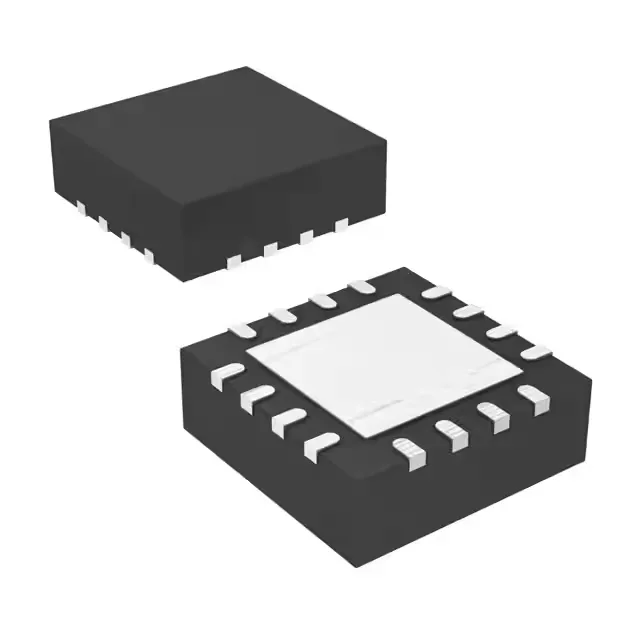
The 10 GPIO pins and built-in brown-out reset, power-on reset, PWM, and watchdog timer cover basic supervision and timing without external glue. Housed in a 16-pin QFN with exposed pad (4x4 mm), it saves board area in compact designs but demands careful soldering — the pad must be properly stitched to the ground plane for thermal and electrical performance.
Memory footprint — 512B Flash and 128B RAM set the task scope
With 512 bytes of Flash and 128 bytes of RAM, this part is sized for a single function: read a sensor, blink a status LED, toggle a relay, or run a low-frequency PWM. No room for a real-time OS or a communication stack beyond bit-banged GPIO. Firmware must be hand-optimised and stored in the 512 x 8 array. The 128 x 8 RAM handles a few local variables and a small stack — any data logging or buffering needs external memory or a larger sibling in the MSP430G2xx series. The Flash is rated for 100k erase/write cycles per sector (typical for MSP430 family), adequate for frequent firmware updates over the part's service life if wear-leveling is implemented in the bootloader.
Peripheral set — bare essentials, no analog
The MSP430G2001IRSA16T includes brown-out detect, power-on reset, a PWM timer, and a watchdog timer. There is no ADC, no comparator, no serial interface — all communication is done by bit-banging GPIO.
Package and mounting — QFN-16 with exposed pad
The 16-VQFN exposed-pad package (4x4 mm body) is a surface-mount only part. Reflow profile per J-STD-020 for MSL 3 (moisture sensitivity level 3, typical for QFN packages).
Lifecycle — active, no EOL watch needed
The MSP430G2xx family remains a mainstream offering, so supply continuity for new designs and replacement orders is not a concern in the near term.