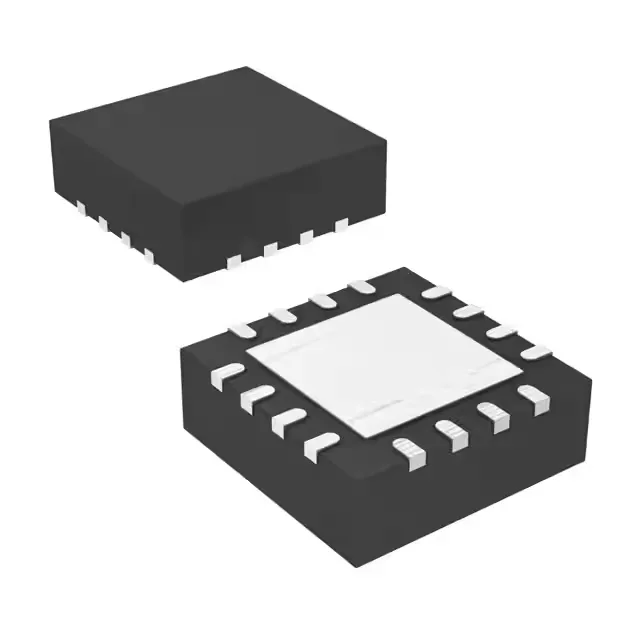
What this 16-bit MCU brings to a low-power BOM
The 10 general-purpose I/O pins, internal oscillator, and on-chip peripherals (brown-out detect, POR, PWM, WDT) let it replace a handful of discrete logic or a small 8-bit MCU in a power-constrained design.
512 bytes Flash, 128 bytes RAM — sizing the firmware budget
The 512-byte Flash and 128-byte RAM are the hard constraints that define whether this part fits your application. The Flash holds the compiled firmware image; a typical MSP430G2xx interrupt vector table and startup code consumes about 32 to 64 bytes, leaving roughly 450 bytes for the application loop, peripheral initialization, and any lookup tables. The 128-byte RAM must cover stack, global variables, and interrupt context — a single 64-byte buffer eats half the budget. If your firmware fits within these limits, the MSP430G2001IRSA16R delivers the lowest active power in the MSP430G2xx lineup, with a typical active-mode draw around 220 µA at 1 MHz and 2.2 V. For designs that need more headroom, the MSP430G2x13 or G2x53 siblings offer 1 KB to 8 KB Flash and 128 to 512 bytes RAM in the same 16-QFN footprint.
Package and mounting: 16-QFN with exposed pad
The part comes in a 16-VQFN Exposed Pad package (supplier device package 16-QFN, 4x4 mm). The QFN footprint is compact, but the 0.5 mm pitch and the center pad require a stencil with good paste coverage to avoid voids.