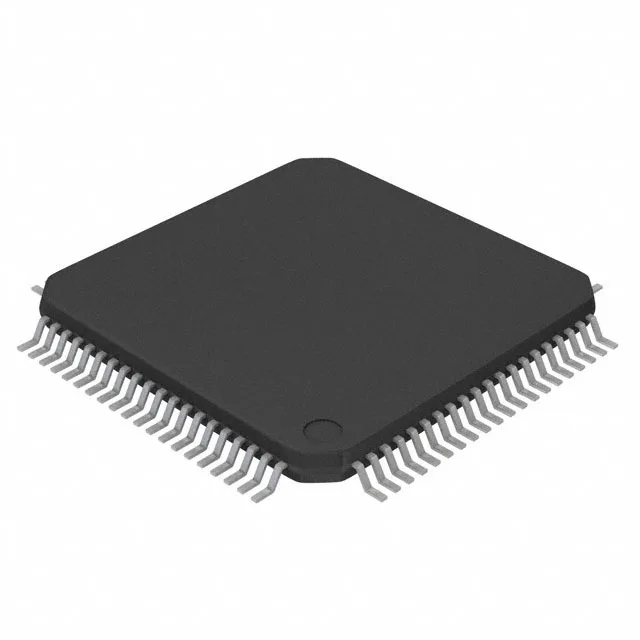
FRAM MCU for field-servicable, low-power designs
Its program memory is 128 KB of FRAM — non-volatile, fast to write, and rated for high endurance, which makes it a solid pick for data-logging or config-heavy applications where you want to avoid EEPROM wear. The 80-LQFP package (12x12 mm) is a standard footprint; you can swap it in the field with a decent iron and some flux, no hot-air station required. It includes 63 I/O, a 12-channel 12-bit ADC, and connectivity for I2C, SPI, UART/USART, and IrDA.
Industrial temp, active production — no LTB worry
It is ROHS3 compliant, and the base product number MSP430FR6989 covers the family — the IPN suffix is the 80-LQFP variant. No official second-source is listed, but the FRAM architecture is TI-specific; if you are dual-sourcing, you are looking at a different core family entirely.
What the 16 MHz and FRAM mean for your BOM
The 16 MHz clock is modest — this is not a number-cruncher. It is sized for control loops, UI handling, and sensor fusion where power draw matters more than MIPS. The FRAM gives you 128 KB of program space that writes at bus speed without erase cycles, so firmware updates over UART are fast and do not wear out the memory. The 2K x 8 RAM is tight; if your application needs large buffers or a TCP/IP stack, you will be swapping to external SRAM or picking a part with more SRAM.