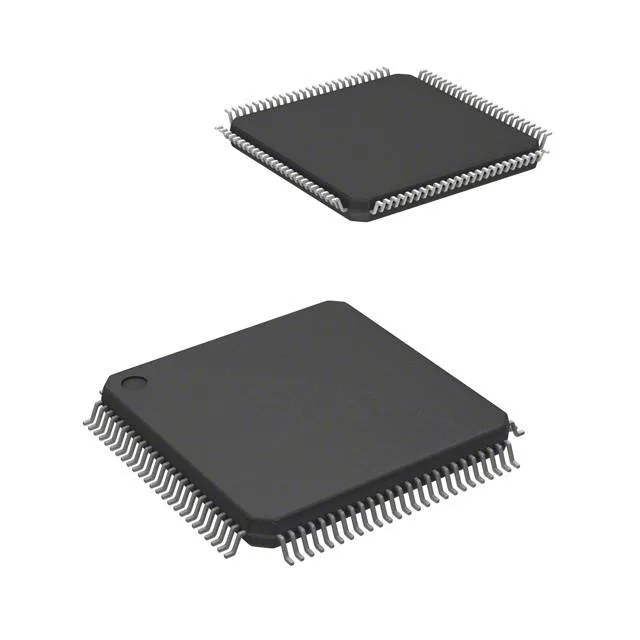
Texas Instruments MSP430FR6988IPZ — Microcontrollers & Processors (MCU / MPU / DSP)

MSP430FR6988IPZ 16-bit MCU, 96KB FRAM, 16 MHz, 100-LQFP

MPNMSP430FR6988IPZ
Active

Texas Instruments MSP430FR6988IPZ, MSP430™ FRAM series, 16-Bit MSP430 CPUXV2 core, 16MHz, 96KB (96K x 8) FRAM, 2K x 8 RAM, 83 I/O, 100-LQFP (14x14), -40°C ~ 85°C.

$6.9647Ref. price · indicative, final on quote
StockContact for availability
MOQ1 pcs
  • 100% new & originalTraceable channels only — no refurbs, no pulls, no remarked parts.
  • Date & lot codes on quoteStated per line before you commit; label photos on request.
  • MSL-compliant ESD packingMoisture-sealed bags with indicator cards; reels photo-verified.
  • PayPal buyer protectionPay by T/T, PayPal or Payoneer — card payments covered end to end.

Specifications

MSP430FR6988IPZ Technical Specifications
ParameterValue
SeriesMSP430™ FRAM
Mounting typeSurface Mount
Oscillator typeInternal
Program memory typeFRAM
Voltage - supply (Vcc (Vdd))1.8V ~ 3.6V
Operating temperature-40°C ~ 85°C (TA)
Speed16MHz
PackageTray
RAM size2K x 8
Core size16-Bit
PeripheralsBrown-out Detect/Reset, DMA, LCD, POR, PWM, WDT
ConnectivityI²C, IrDA, SPI, UART/USART
Number of i (O)83
Core processorMSP430 CPUXV2
Case100-LQFP
Data convertersA/D 16x12b
Program memory size96KB (96K x 8)

Product details

FRAM unifies Flash and EEPROM into a single non-volatile memory that writes at bus speed, draws negligible power during writes, and endures orders of magnitude more write cycles than Flash — a practical advantage for data-logging, configuration storage, and OTA firmware updates where the application rewrites memory sectors regularly. The 16 MHz clock is the ceiling for the CPU and peripherals; at this speed the device can handle real-time control loops and communication tasks typical of sensor hubs, metering, and industrial panels without external oscillators (the internal oscillator is rated for this).

What the 83 I/O and integrated peripherals let you skip

For a system architect, this peripheral set means the MSP430FR6988IPZ can serve as the main controller in a gas/water meter, a portable medical monitor, or a building-automation sensor node with a minimal BOM — the FRAM replaces both the main Flash and a separate EEPROM, and the LCD driver eliminates a display controller.

If a second-source or pin-compatible alternate is needed for dual-sourcing, the MSP430FR69xx family shares the same 100-LQFP footprint and peripheral set across density options, though the exact FRAM and RAM sizes vary — verify the memory map against the application.

Package and footprint — 100-LQFP with 14x14 mm body

The 0.5 mm pitch requires careful PCB layout for routing density, but the package is common enough that footprint libraries are widely available.

Frequently asked questions

Is MSP430FR6988IPZ compatible with MSP430F series?

The MSP430FR6988IPZ uses the MSP430 CPUXV2 core, which is instruction-set compatible with the MSP430F series (MSP430 CPU). However, the FRAM memory architecture differs from the Flash-based MSP430F devices — the memory map, erase granularity, and write timing are not identical. Code written for MSP430F parts may need adjustments for the FRAM timing and memory organization, but the core instruction set and peripheral register maps are largely compatible.

What is the replacement for MSP430FR6988IPZ?

There is no official replacement listed for the MSP430FR6988IPZ as it is an active, current-production part. Within the MSP430FR69xx family, higher-density variants (e.g., MSP430FR6989 with 128 KB FRAM) share the same 100-LQFP footprint and peripheral set, offering a memory upgrade path. For a pin-compatible alternate within the same family, verify the specific FRAM and RAM sizes against the application requirements.

What development tools support MSP430FR6988IPZ?

The MSP430FR6988IPZ is supported by Texas Instruments' Code Composer Studio IDE, the MSP430-GCC toolchain, and the Energia open-source prototyping platform. The MSP-EXP430FR6989 launchpad evaluation board can be used for development and debugging via the Spy-Bi-Wire (SBW) interface.