FRAM vs Flash — the practical difference at the bench
FRAM writes at bus speed — no erase, no delay. 64 KB holds both code and non-volatile data.
Supply range 1.8 V to 3.6 V. 80-LQFP (12x12 mm) package.
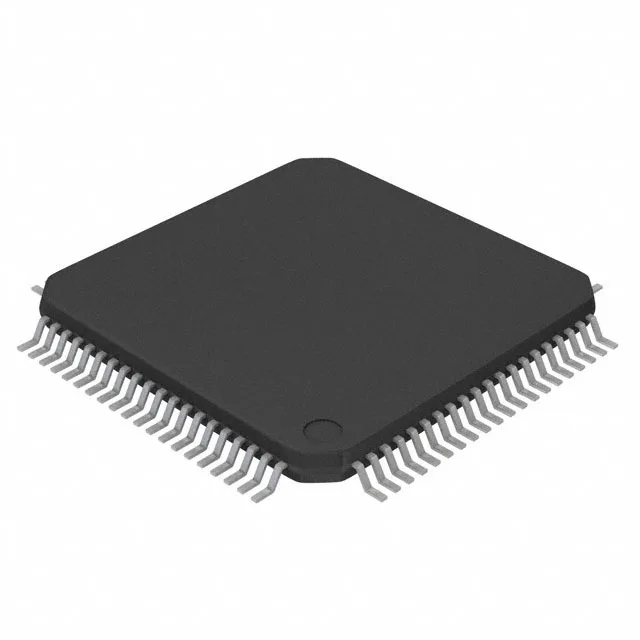
TI MSP430™ FRAM series, 16-bit MCU, MSP430FR6977IPN, CPUXV2 core at 16 MHz, 64 KB FRAM, 2K x 8 RAM, 63 I/O, integrated LCD driver, 12x12b ADC, 80-LQFP, -40 to 85°C.
| Parameter | Value |
|---|---|
| Series | MSP430™ FRAM |
| Mounting | Surface Mount |
| Oscillator type | Internal |
| Program memory type | FRAM |
| Voltage - supply (Vcc (Vdd)) | 1.8V ~ 3.6V |
| Operating temperature | -40°C~85°C(TA) |
| Speed | 16MHz |
| Package | Tube |
| RAM size | 2K x 8 |
| Core size | 16-Bit |
| Peripherals | Brown-out Detect/Reset, DMA, LCD, POR, PWM, WDT |
| Connectivity | I²C, IrDA, SCI, SPI, UART/USART |
| Number of i (O) | 63 |
| Core processor | MSP430 CPUXV2 |
| Case | 80-LQFP |
| Data converters | A/D 12x12b |
| Program memory size | 64KB (64K x 8) |
FRAM writes at bus speed — no erase, no delay. 64 KB holds both code and non-volatile data.
Supply range 1.8 V to 3.6 V. 80-LQFP (12x12 mm) package.
The CPUXV2 core runs at 16 MHz, which is enough to drive the LCD, sample 12 ADC channels, and handle UART communication in a typical metering or display application.
It is part of the MSP430™ FRAM series, which uses ferroelectric RAM for program memory — no EEPROM wear limits and near-instant writes.