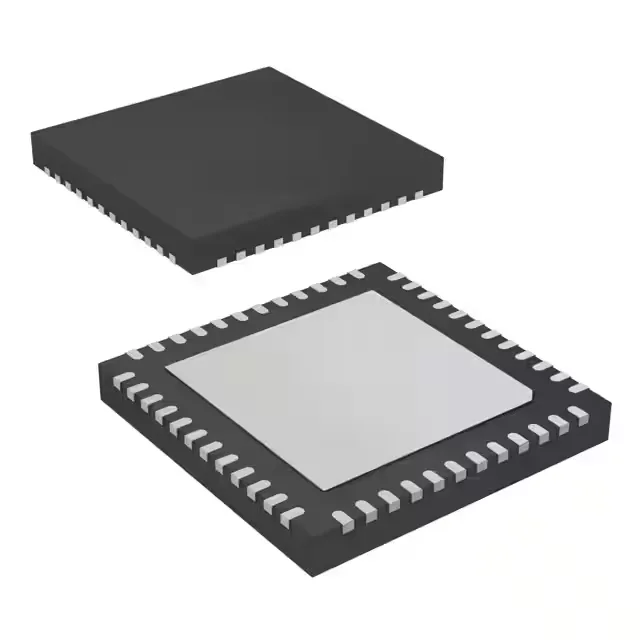
FRAM memory and 16 MHz core for low-power edge processing
Connectivity covers I²C, SPI, UART/USART, and IrDA, so the part can talk to common sensor modules, memory chips, and radio modules directly.
For a battery-powered sensor that logs data every minute, FRAM eliminates the energy spike of a Flash page-erase cycle — that spike is often the dominant energy event in a wake-sense-send-sleep sequence. The 256 KB capacity is enough for firmware plus a modest data buffer; if the application needs more than 8 KB of SRAM for runtime variables, the DMA engine can move data directly between FRAM and peripherals without CPU intervention.
For volume or long-term BOM planning, the base product number MSP430FR5994 covers multiple package and temperature variants within the same FRAM family, providing some second-source flexibility within TI's own portfolio.