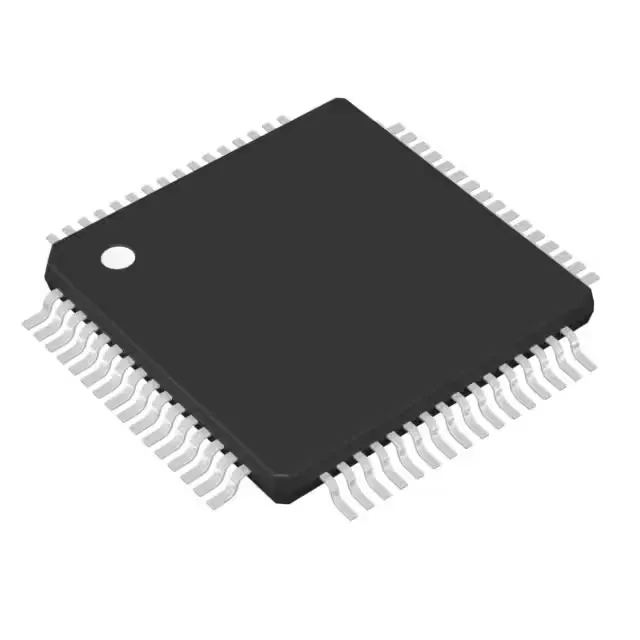
MSP430FR5994IPM TI 16MHz FRAM MCU, 256KB, 54 I/O, 64-LQFP
Texas Instruments MSP430FR5994IPM, MSP430™ FRAM series, 16-bit MSP430 CPUXV2 @ 16MHz, 256KB FRAM, 8KB RAM, 17-channel 12-bit A/D converter with DMA, 54 I/O, I²C/SPI/UART/USART/IrDA, 1.8V–3.6V supply, –40°C–85°C, 64-LQFP tube.
Specifications
| Parameter | Value |
|---|---|
| Series | MSP430™ FRAM |
| Mounting | Surface Mount |
| Oscillator type | External, Internal |
| Program memory type | FRAM |
| Voltage - supply (Vcc (Vdd)) | 1.8V ~ 3.6V |
| Operating temperature | -40°C~85°C(TA) |
| Speed | 16MHz |
| Package | Tube |
| RAM size | 8K x 8 |
| Core size | 16-Bit |
| Peripherals | Brown-out Detect/Reset, DMA, POR, PWM, WDT |
| Connectivity | I²C, IrDA, SPI, UART/USART |
| Number of i (O) | 54 |
| Core processor | MSP430 CPUXV2 |
| Case | 64-LQFP |
| Data converters | A/D 17x12b |
| Program memory size | 256KB (256K x 8) |
Frequently asked questions
What does the 16MHz clock mean for real-time performance compared to a typical 80MHz ARM Cortex-M in the same 54-I/O LQFP class?
The MSP430FR5994IPM is a 16-bit 16MHz architecture running the MSP430 CPUXV2 — it is not a direct performance peer for a 32-bit Cortex-M running at 80MHz. For control-plane tasks, communication handling, and sensor sampling, the 16MHz MSP430 is sufficient and often preferable for its sub-microamp sleep currents. For compute-intensive signal processing or high-rate control loops, the clock delta is a genuine architectural constraint, not a minor spec spread. Match the processor class to the worst-case latency requirement before selecting on headline I/O count.