FRAM instead of Flash — what it changes on the BOM
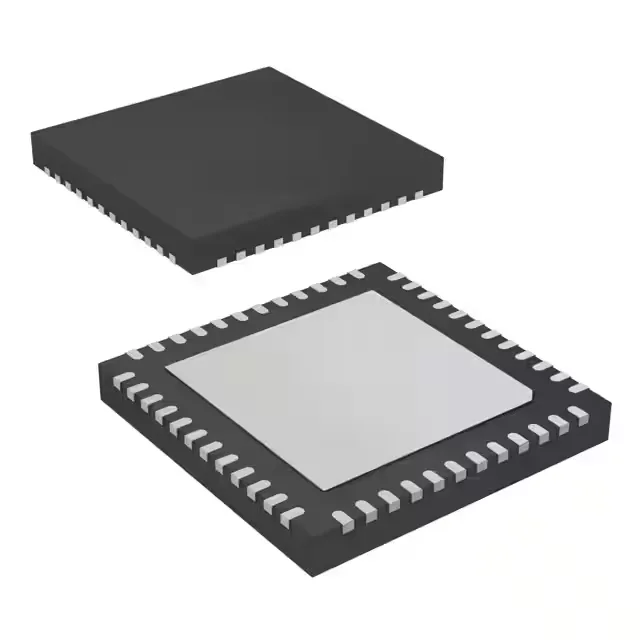
What sets it apart from conventional Flash-based MCUs is its 64 KB FRAM program memory — non-volatile, byte-addressable, and rated for far more write cycles than Flash or EEPROM. The 2K x 8 RAM handles stack and scratchpad; the 40 I/O lines and the integrated 12-bit ADC (16 channels) cover most sensor interface and control tasks without external converters.
Peripherals and connectivity — what is on-chip
On the peripheral side you get Brown-out Detect/Reset, POR, PWM, WDT, and DMA — enough to handle most sensor-fusion and control loops without external supervision.