The 1K x 8 SRAM handles stack and scratchpad.
FRAM — why it changes the memory decision
FRAM (ferroelectric RAM) is the program memory type here, not Flash. That means writes at bus speed with no erase-before-write penalty, endurance of roughly 10^15 cycles versus Flash's 10^4–10^5, and lower active write power. For data-logging, over-the-air firmware updates, or any application that writes to code space frequently, FRAM eliminates the wear-leveling and write-buffering overhead you'd need with Flash. The trade-off: density tops out lower than Flash for the same die area, so 16 KB is the program budget — fine for sensor nodes, motor-control state machines, and protocol bridges, but tight for complex RTOS-based stacks.
Package reality: 24-DSBGA rework considerations
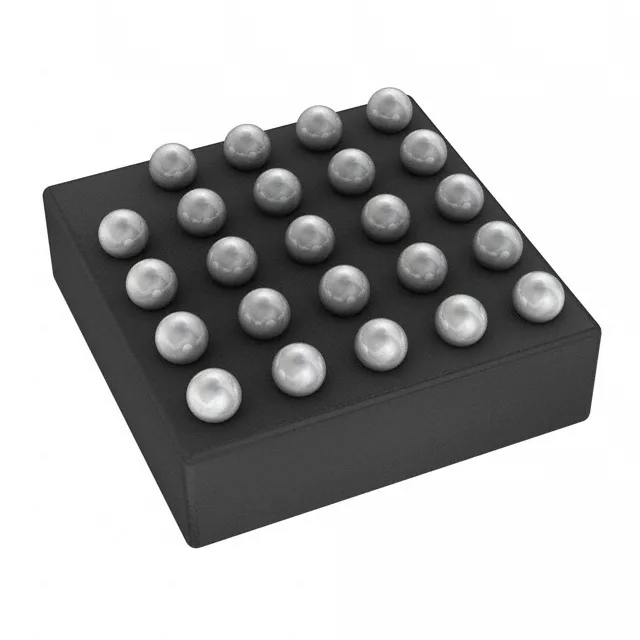
The MSP430FR5738IYQDT comes in a 24-pin DSBGA (0.4 mm pitch, 24-DSBGA). That's a fine-pitch BGA with no exposed leads — rework by hand is impractical without a rework station and stencil. The 24-DSBGA footprint saves board area versus a TSSOP or QFN, but the layout needs via-in-pad or micro-vias for the inner balls.
For BOM planning, this carries no last-time-buy risk for the foreseeable future. The part is ROHS3 compliant.