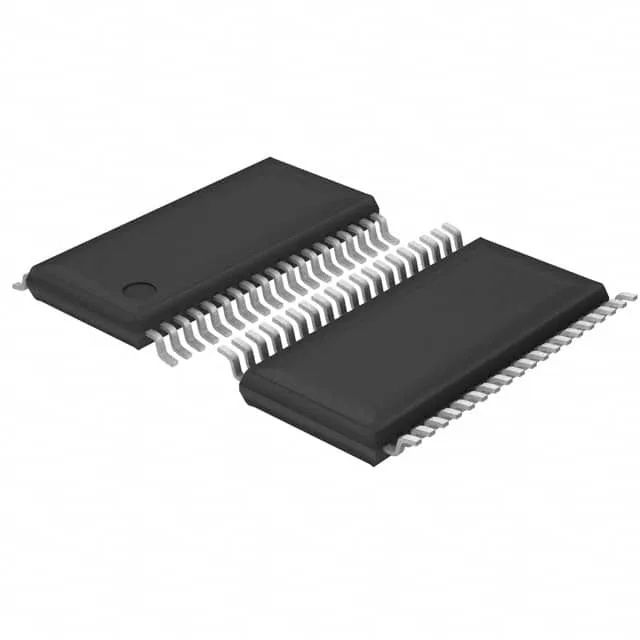
FRAM-based 16-bit MCU for low-power sensing and control
FRAM combines the non-volatility of Flash with write speeds and endurance closer to SRAM — writes are fast, bit-level, and consume minimal energy, which matters for data-logging and configuration storage in battery-powered designs. Typical applications span industrial sensor nodes, portable instrumentation, metering, and building automation where low active and sleep current are critical.
The supply voltage range of 2V to 3.6V covers both single-cell battery operation (down to 2V) and standard 3.3V regulated rails. At 3.3V the I/O levels are directly compatible with 3.3V logic peripherals — no level shifting needed for SPI flash, I²C sensors, or UART bridges.
Industrial temperature grade — what it means for deployment
The industrial temperature range also covers most automotive cabin applications (non-AEC-Q100, but thermally capable). The 38-TSSOP package with 0.65mm pitch requires careful PCB layout for soldering reliability and thermal management, but the low power draw keeps self-heating minimal.
For a BOM line this means no near-term last-time-buy pressure and continued datasheet and toolchain support from TI. The base product number MSP430FR5725 covers multiple package and temperature variants, so a pin-compatible migration within the family is straightforward if density or feature requirements change.