FRAM-based 16-bit MCU for low-power sensor and control nodes
The device integrates 1K x 8 of RAM, 32 general-purpose I/O, and a serial interface set covering I²C, SPI, UART, IrDA, and LINbus.
8 KB FRAM — what it changes for firmware and data storage
There is no page-erase penalty — the same memory can store calibration constants, event logs, or OTA staging data without wear-leveling. The 1K x 8 RAM handles stack and scratchpad; total memory is tight, so firmware must fit in 8 KB with no external memory expansion. For designs that currently split data between Flash and an external EEPROM, this part consolidates both into one FRAM block.
Supply range and power rail planning
No external LDO is needed if the battery stays within range. Brown-out detect and POR are integrated, so the reset circuit is minimal.
Package and board-level considerations
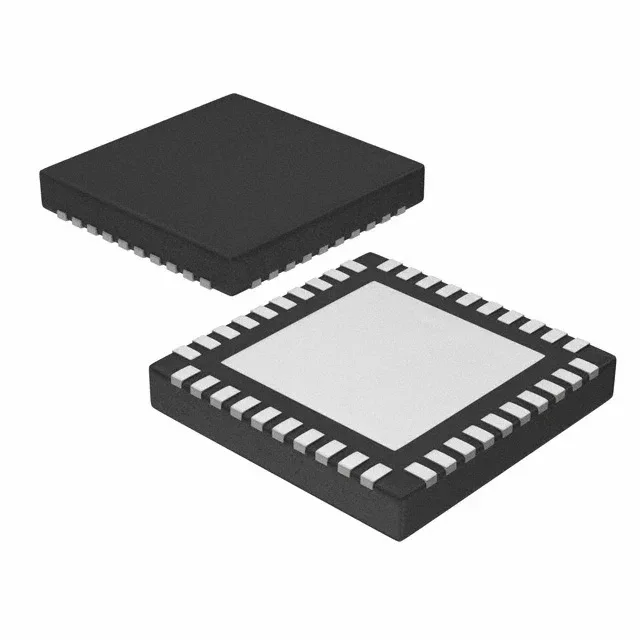
Housed in a 40-VQFN with exposed pad (6x6 mm), this package requires a proper solder stencil and reflow profile — not a hand-solder part. The thermal pad must be connected to ground with via stitching to dissipate heat and provide a solid electrical reference. The 32 I/O are available on the QFN perimeter; no fine-pitch BGA, so inspection and rework are feasible with standard equipment.
The base product number MSP430FR5723 covers the family; density and package variants exist within the MSP430 FRAM series, but no pin-compatible second source from another manufacturer is listed. For a production BOM line, this part presents no LTB risk today.