What the NRND status means for your BOM
That means TI has stopped accepting new design registrations for this exact order code, though it remains available through distribution for existing production.
8 KB FRAM — why it is the headline feature
The 8 KB FRAM program memory is the defining differentiator versus conventional Flash MCUs. For a firmware-update-critical sensor node or a data-logging endpoint that writes frequently, FRAM eliminates the wear-leveling and endurance budgeting that Flash demands. The 1K x 8 SRAM handles stack and scratchpad; the unified FRAM address space simplifies code/data partitioning.
8 MHz core — what it handles
The MSP430 CPUXV2 core runs at 8 MHz — a speed tier suited to low-duty-cycle sensor readout, serial protocol handling, and control loops that do not need a high-MHz Cortex-M. The 16-bit word width maps well to 12-bit ADC data and 16-bit timer PWM periods.
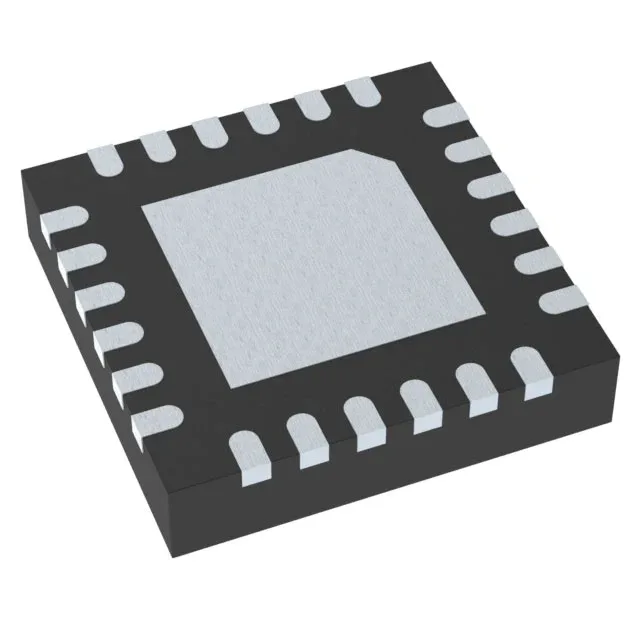
The 24-VQFN (4x4 mm) package with exposed pad helps thermal management in enclosed designs.
Seventeen I/O lines with Brown-out Detect, POR, PWM, and WDT cover basic control and supervisory functions. The SCI and IrDA support is a bonus for legacy industrial links.
Sourcing posture for this NRND MCU
Because the MSP430FR5722IRGET carries an NRND lifecycle status, it is not a part you want to spec into a new design without a transition plan. For existing BOM lines, we source this part on a quoted-to-order basis through our independent distribution network. Submit an RFQ for your target volume and date-code preference; we will validate the channel and provide a firm quote.