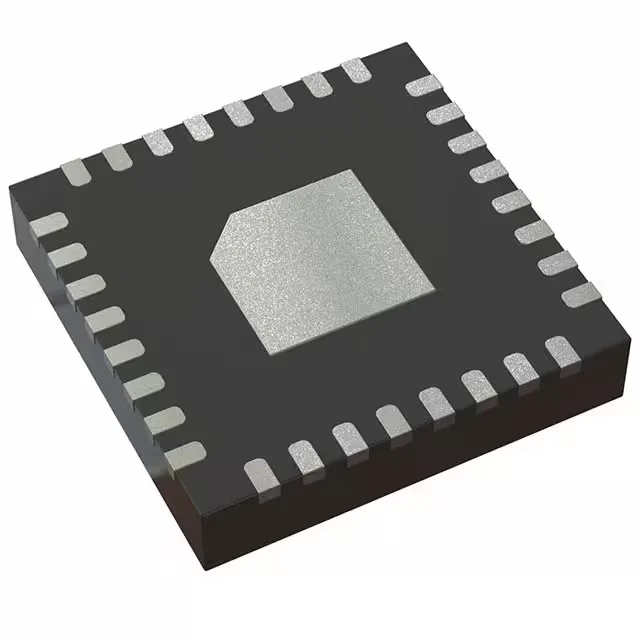
FRAM-based 16-bit MCU for low-power sensor and control designs
It belongs to the MSP430 FRAM series, where the program memory is 15.5 KB of ferroelectric RAM (FRAM) instead of Flash — a non-volatile memory that writes at bus speed, consumes less power per write, and endures far more write cycles than typical Flash or EEPROM. The device integrates 4K x 8 of SRAM, an 8-channel 10-bit ADC, and serial interfaces including I²C, SPI, and UART.
FRAM advantage: unified memory with fast writes and high endurance
The 15.5 KB FRAM program memory is the standout feature of this part. Unlike Flash-based MCUs where a sector erase can take tens of milliseconds, FRAM writes at the bus speed — typically under 100 ns per byte — with no erase cycle required. Endurance is rated at 10^15 write cycles, effectively unlimited for most embedded applications. This makes the MSP430FR2633IRHBR a natural fit for data-logging nodes, configuration storage, and any design where the MCU must update its own code or calibration constants in the field without wearing out the memory.
Peripheral set and I/O for compact control boards
With 19 general-purpose I/O pins, an 8-channel 10-bit ADC, and serial connectivity covering I²C, SPI, UART, and IrDA, this MCU can handle a typical sensor-to-communication bridge without external glue logic.
Package and thermal: 32-VQFN with exposed pad
The 32-VQFN (5x5 mm) package with exposed thermal pad is the only package option for this ordering code. The supplier device package is 32-VQFN (5x5), so the PCB footprint is consistent across the MSP430FR2633 family.
It is ROHS3 compliant.