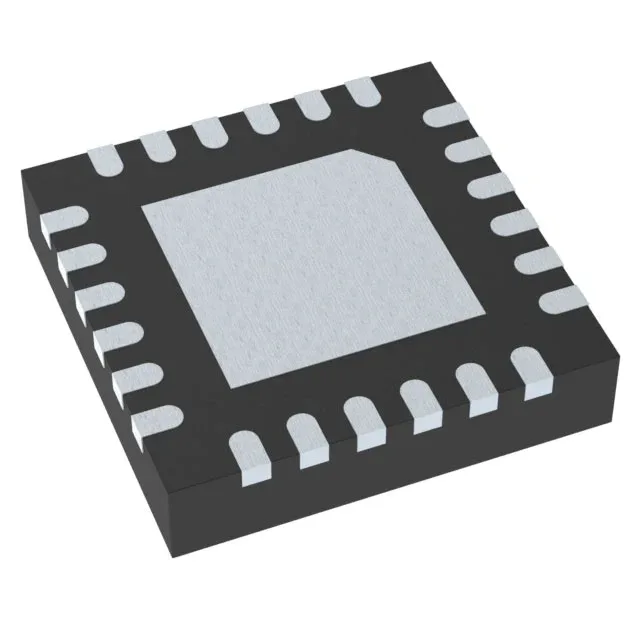
FRAM-based 16-bit MCU for sensor and control applications
Its program memory is 8.5 KB of FRAM — a non-volatile memory that combines the speed of SRAM with the persistence of flash, allowing unified memory for code and data with fast writes and near-infinite endurance.
FRAM vs flash — what 8.5 KB of unified memory means for the BOM
The 8.5 KB FRAM program memory is the headline differentiator on this part. Unlike flash-based MCUs where code and data are in separate banks with different write/erase cycles, FRAM lets you treat the whole 8.5 KB as a single memory space. Writes happen at bus speed without erase cycles, so you can log calibration data, store configuration parameters, or update firmware in the field without wearing out sectors. The 2K x 8 RAM handles stack and runtime variables; the FRAM handles the rest.
Package and mounting — 24-VQFN with exposed pad
The 15 I/O lines are distributed around the perimeter; the pad is on the bottom.
The MSP430 FRAM series has broad portfolio support from TI, so if a future design needs more memory or I/O, there are pin-compatible density options within the family without changing the footprint.
For a procurement buyer filling a BOM line, the move is to submit an RFQ with quantity and target delivery window; the desk will respond with a firm price and availability from franchised or vetted independent stock. Given the Active status, there is no urgency premium from an impending EOL — this is a standard replenishment buy, not a shortage scramble.