FRAM memory — what it changes in the field
What sets it apart from garden-variety Flash MCUs is the 15.5 KB of FRAM program memory — it writes at bus speed, draws near-zero power in standby, and doesn't wear out like EEPROM. That means you can log data or update firmware in the field without worrying about endurance cycles or slow page-erase times. The 2 KB of SRAM handles the stack and scratch buffers.
Peripherals and I/O for a sensor node
You get 19 GPIOs, an 8-channel 10-bit ADC, and serial interfaces covering I²C, SPI, and UART — enough to talk to a typical sensor array or radio module. Brown-out reset and POR are built in, so you can skip the external supervisor.
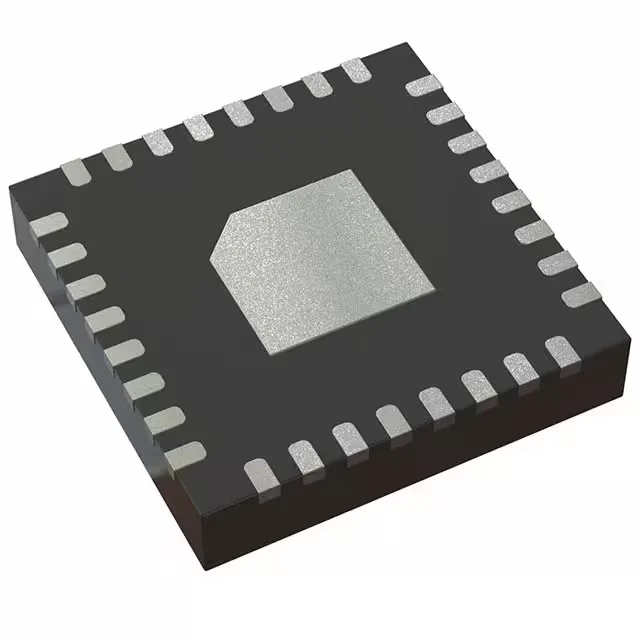
Housed in a 32-VQFN with exposed pad (5 mm x 5 mm), it's a surface-mount part that reflows fine with standard lead-free profiles.