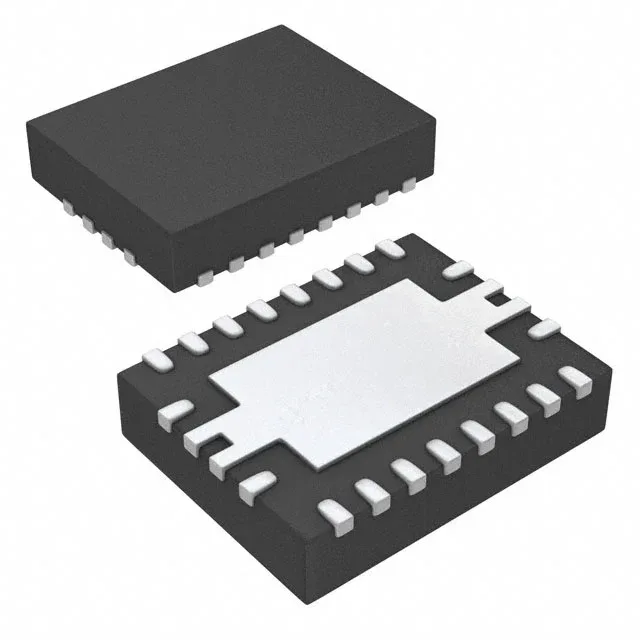
FRAM-based 16-bit MCU for touch and sensor applications
The MSP430FR2512IRHLT: Its program memory is 7.5 KB of FRAM — a unified non-volatile memory that combines the write speed and endurance of SRAM with the retention of Flash, eliminating the need for separate EEPROM for calibration constants or configuration data. The device integrates capacitive touch sensing (Cap Sense), a 10-bit ADC with eight multiplexed channels, and serial interfaces including I²C, SPI, and UART.
FRAM program memory — what it changes for the BOM
The 7.5 KB FRAM serves as both program store and data EEPROM. For a BOM line, this means one fewer memory chip and no worry about wear-leveling for frequently updated calibration tables or event logs. The 2 KB of SRAM handles stack and volatile buffers.
Capacitive touch and analog interface — no external front-end needed
The integrated Cap Sense peripheral handles capacitive touch buttons, sliders, and proximity detection without external analog ICs. The 8-channel 10-bit ADC reads sensor outputs directly. The 15 general-purpose I/O pins are enough for a small keypad plus indicator LEDs or a serial display.
20-VQFN package — layout and thermal considerations
Lifecycle status — active, no LTB risk
The part is ROHS3 compliant. For production planning, this means no forced redesign for obsolescence in the near term — the FRAM MSP430 family is an ongoing TI platform with multiple density and peripheral variants.