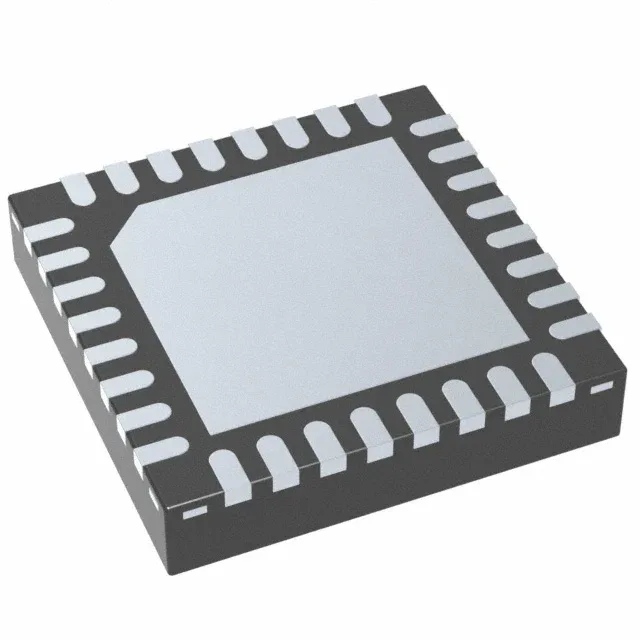
Texas Instruments MSP430FR2355TRSMR — Microcontrollers & Processors (MCU / MPU / DSP)

TI MSP430FR2355TRSMR 16-bit MCU, 24 MHz, 32 KB FRAM

MPNMSP430FR2355TRSMR
Active

Texas Instruments MSP430FR2355TRSMR, MSP430™ FRAM series, 16-bit MCU, 24 MHz, 32 KB FRAM, 4K x 8 SRAM, 28 I/O, 1.8V–3.6V, -40°C to 105°C, 32-VQFN (4x4).

$2.0684Ref. price · indicative, final on quote
Independent supplier — new & surplus stockAuthenticity-screened · ESD-safe packingListing updated Jul 2026

Specifications

MSP430FR2355TRSMR specifications
ParameterValue
SeriesMSP430™ FRAM
MountingSurface Mount
Oscillator typeInternal
Program memory typeFRAM
Voltage - supply (Vcc (Vdd))1.8V ~ 3.6V
Operating temperature-40°C~105°C(TA)
Speed24MHz
PackageTape & Reel (TR)
RAM size4K x 8
Core size16-Bit
PeripheralsBrown-out Detect/Reset, POR, PWM, WDT
ConnectivityI²C, IrDA, SPI, UART/USART
Number of i (O)28
Core processorMSP430 CPU16
Case32-VFQFN Exposed Pad
Data convertersA/D 8x12b SAR
Program memory size32KB (32K x 8)

Product details

FRAM instead of Flash — what that changes on the BOM

Its program memory is 32 KB of FRAM, not Flash — that means unified memory for code and data, write endurance of 10^15 cycles, and single-cycle writes at full speed. No erase-before-write penalty, no sector management for nonvolatile data storage. The 4K x 8 SRAM handles stack and scratchpad.

Package and PCB integration

Housed in a 32-VFQFN with exposed pad (4x4 mm body, supplier package 32-VQFN). Surface-mount only; 28 general-purpose I/O are available.

Frequently asked questions

What is the difference between MSP430FR2355TRSMR and MSP430FR2356?

The MSP430FR2356 is a higher-density sibling in the same FRAM series — it doubles the program memory to 64 KB while keeping the same 24 MHz core, 4K x 8 SRAM, 28 I/O count, and 32-VQFN package. The MSP430FR2355TRSMR with 32 KB is the cost-optimized choice when the application fits within that memory budget.

What are the programming tools for MSP430FR2355TRSMR?

Standard MSP430 toolchain applies: TI's Code Composer Studio (CCS), IAR Embedded Workbench, and Energia (an Arduino-like IDE). Debug and programming via the SBW (Spy-Bi-Wire) two-wire JTAG interface using a TI LaunchPad or standalone debugger like the MSP-FET.