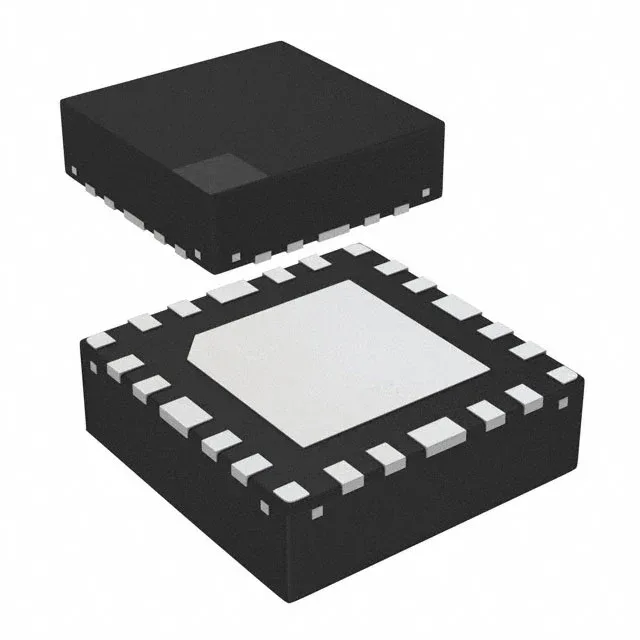
Texas Instruments MSP430FR2000IRLLT — Microcontrollers & Processors (MCU / MPU / DSP)

TI MSP430FR2000IRLLT 16-bit MCU, 512B FRAM, 16 MHz, 24-VQFN

MPNMSP430FR2000IRLLT
Active

Texas Instruments MSP430™ FRAM series, MSP430FR2000IRLLT 16-bit MCU, 16 MHz CPU16 core, 512B FRAM, 512 x 8 RAM, 12 I/O, 1.8-3.6V, -40 to 85°C, 24-VFQFN exposed pad.

$1.1100Ref. price · indicative, final on quote
Packaging24-VFQFN Exposed Pad
RoHSROHS3 Compliant
SeriesMSP430™ FRAM
Independent supplier — new & surplus stockAuthenticity-screened · ESD-safe packingListing updated Aug 2026

Specifications

MSP430FR2000IRLLT specifications
ParameterValue
SeriesMSP430™ FRAM
MountingSurface Mount
Oscillator typeInternal
Program memory typeFRAM
Voltage - supply (Vcc (Vdd))1.8V ~ 3.6V
Operating temperature-40°C ~ 85°C (TA)
Speed16MHz
PackageTape & Reel (TR) Cut Tape (CT)
RAM size512 x 8
Core size16-Bit
PeripheralsBrown-out Detect/Reset, POR, PWM, WDT
ConnectivityIrDA, SCI, SPI, UART/USART
Number of i (O)12
Core processorMSP430 CPU16
Case24-VFQFN Exposed Pad
Program memory size512B (512 x 8)

Product details

16 MHz CPU16 core with 512B unified FRAM

The MSP430FR2000IRLLT is a 16-bit MCU from the MSP430 FRAM family, built around the MSP430 CPU16 core clocked at 16 MHz. The headline here is the 512B FRAM program memory — it writes at bus speed without the page-erase penalty of Flash, and it unifies code and data storage so a single memory space serves both. For a sensor node or control loop that logs calibration constants or runtime counters, FRAM eliminates the EEPROM emulation layer and the wear-leveling logic that Flash demands. The 512 x 8 RAM is modest — enough for a super-loop scheduler or a small state machine, but a full RTOS with multiple stacks will exhaust it before the code space does. The 12 I/O count means each pin needs a clear assignment early in the schematic; there is no room for unused pins to float.

Package and board-fit: 24-VFQFN with exposed pad

A 3.3 V rail is the obvious choice, but the low end lets the part run from a 2xAA battery stack down to near-depletion without a boost converter.

Peripherals and connectivity for sensor-node designs

The PWM output is useful for driving a LED indicator or a small piezo buzzer directly. Serial connectivity covers IrDA, SCI, SPI, and UART/USART. The SPI and UART are the workhorses for external sensors (temperature, humidity, pressure) and short-range radios. The IrDA module is present but rarely used in new designs — it adds no pin cost since it shares the UART pins.

Active production and compliance posture

ROHS3 compliance is confirmed, covering all six original substances plus the four phthalates, with no exemption-based carve-outs.

Frequently asked questions

What is the closest functional second-source for MSP430FR2000IRLLT — F280041PZQR?

The F280041PZQR is not a functional second-source. It is a C2000 C28x 32-bit MCU with a Flash memory type, 100 MHz core, and a different package. The MSP430FR2000IRLLT uses FRAM memory and a 16-bit CPU16 core — they are architecturally different and not pin-to-pin compatible.

What does the 512B FRAM memory mean for a firmware update strategy?

512 bytes is the entire program space — there is no room for a bootloader that stores a new image alongside the running code. Firmware updates must be done via a debug interface (SBW/JTAG) that writes directly to FRAM, or the device must be pre-programmed before assembly. The advantage of FRAM is that writes are fast and wear-free, so repeated field updates via a wired debug connection are viable.