Mixed-signal MCU with USB and precision analog on one die
It packs 64 KB of program Flash and 10 K x 8 of RAM, plus a 10-channel 16-bit ADC and two 12-bit DACs — enough analog front-end for sensor conditioning or closed-loop control without external converters. The peripheral set includes USB (full-speed device), multiple UART/SPI/I2C serial interfaces, an LCD driver, DMA, and a hardware multiplier.
20 MHz CPUXV2 — what it buys you
At 20 MHz the CPUXV2 can sustain a 16-bit multiply-accumulate in a single cycle, which matters for real-time digital filtering or PID loops. The same clock drives the USB PLL, so the bus doesn't stall when the USB interface is active. If your application needs to sample the ADC at rates above 10 ksps while streaming data over USB, this clock budget keeps the pipeline fed without wait-state bottlenecks.
USB and serial connectivity — one chip, no bridge
The listed connectivity set includes USB, I2C, SPI, UART/USART, and IrDA. The USB peripheral is a full-speed device controller with integrated transceiver — no external PHY needed. For a data-logger or portable instrument that must talk to a PC, this eliminates a separate USB-to-UART bridge chip from the BOM. The remaining serial ports can handle a sensor bus (I2C), a radio module (SPI), and a debug console (UART) simultaneously.
Package and supply — BGA routing and voltage range
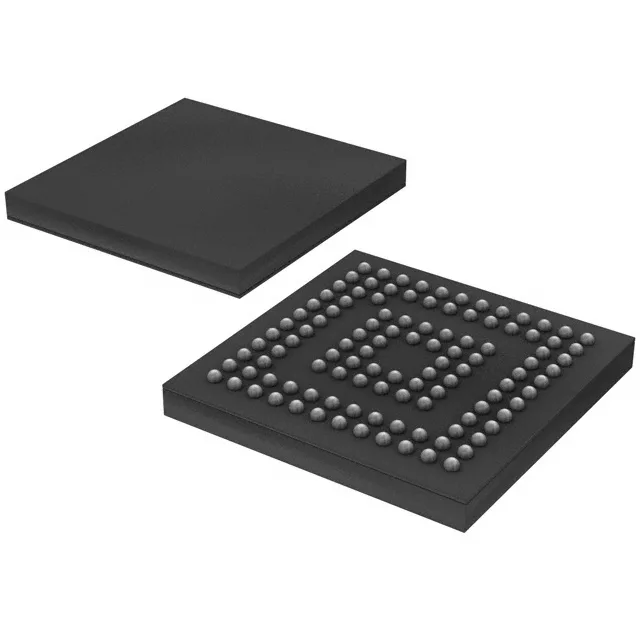
The 113-ball VFBGA (7x7 mm) with 0.5 mm pitch demands fine-line PCB routing — two signal layers are typical for breakout, with microvias recommended for the inner balls. The internal oscillator means no external crystal is required for the core clock, though a low-frequency crystal is still advisable for RTC accuracy.
TI lists the MSP430FG6625IZQWR as Active. For production builds, this means no last-time-buy planning is required in the near term.