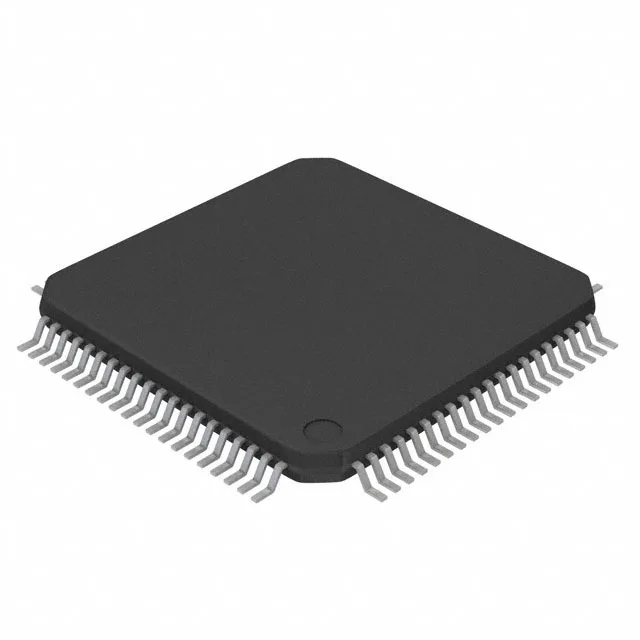
The Texas Instruments MSP430F67621IPN is a 16-bit ultra-low-power microcontroller from the MSP430F6xx series, built around the MSP430 CPUXV2 core clocked at 25 MHz. The 52 general-purpose I/O lines and serial interfaces (I2C, SPI, UART/USART, IrDA) support connection to metrology front-ends, communication modules, and display controllers. Operating from a single 1.8 V to 3.6 V supply with an internal oscillator, it is rated over the industrial temperature range of -40°C to 85°C and packaged in an 80-LQFP (12×12 mm) footprint.
Three 24-bit sigma-delta ADCs — the metrology core
The three 24-bit sigma-delta converters are the part's primary differentiator. They enable simultaneous sampling of voltage and current phases in polyphase energy meters, or multi-channel precision measurement in weigh scales and flow transmitters. The 24-bit resolution provides the dynamic range needed to maintain accuracy over a wide input span without external gain stages. For a calibration technician, the question is long-term drift: the sigma-delta modulator's inherent linearity holds up well, but the reference accuracy and temperature coefficient will determine whether the system stays within tolerance over a year's operation.
25 MHz CPUXV2 core — throughput for real-time math
The 25 MHz clock rate on the MSP430 CPUXV2 core is sufficient for the multiply-accumulate operations required by metrology algorithms and digital filtering. It is not a high-end DSP, but the combination of the hardware multiplier and the sigma-delta converters means the MCU can compute active, reactive, and apparent power in firmware without an external coprocessor. The 64 KB Flash holds the metrology library plus a communication stack (Modbus, DLMS, or custom protocol) with room to spare.