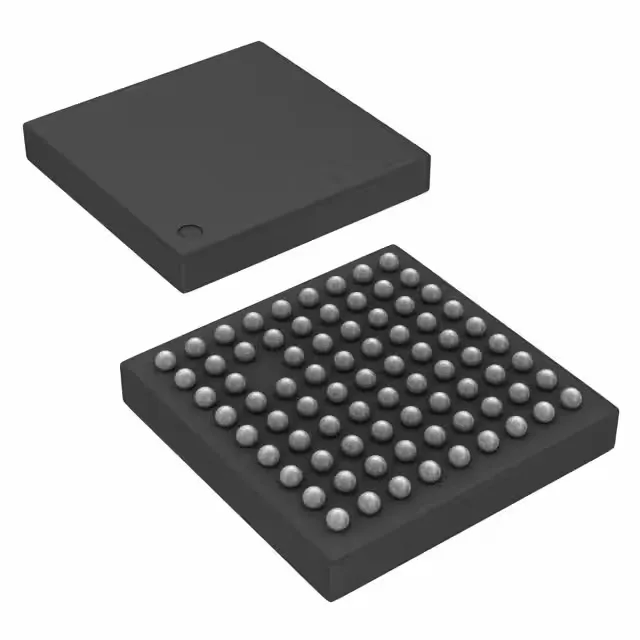
25 MHz core, USB 2.0, and the 80-ball BGA — what this MSP430 variant brings
Forty-seven GPIO lines and a 12-channel 10-bit ADC round out the peripheral set.
This means TI has ceased production and no further factory orders are accepted.
24 KB Flash and 6 KB SRAM — sizing the firmware budget
With 24 KB of Flash and 6 KB of SRAM, this MCU sits in the mid-range of the MSP430F5xx family. The USB stack and a typical application firmware will consume roughly half that Flash, leaving headroom for moderate feature expansion. The 6 KB SRAM is adequate for USB packet buffers and a modest call stack, but designs with large data arrays or multiple communication buffers should verify memory fit early. The 6K x 8 SRAM organization is byte-addressable, matching the CPUXV2's 16-bit word access pattern.
80-ball BGA MICROSTAR JUNIOR — board-level considerations
The 80-BGA MICROSTAR JUNIOR package (5×5 mm) is a fine-pitch ball-grid array. The 0.5 mm or 0.65 mm ball pitch (TI documentation specifies the exact footprint) requires controlled impedance routing, via-in-pad for dense designs, and X-ray inspection after reflow. The package is surface-mount only.
USB 2.0 and multi-protocol serial — what the connectivity means
The USB 2.0 full-speed (12 Mbps) interface supports device, host, and OTG modes, making this part suitable for USB dongles, data loggers with direct PC connection, or portable devices that act as USB hosts for keyboards or memory sticks. The multi-protocol serial engine — I²C, SPI, UART, LIN, IrDA — runs concurrently with USB, so a single chip can handle USB communication while managing a sensor bus over I²C or driving a display over SPI. The 47 GPIO lines provide ample room for local control and status signals.