16 KB flash, 6 KB SRAM — where the firmware lands
The MSP430F5508IRGZT: After the USB 2.0 stack and bootloader reserve their sectors, the usable flash for application code is roughly 12–14 KB depending on the TI USB API version — enough for a HID-class composite device or a CDC serial bridge with a modest sensor-processing loop. The 6 KB SRAM split between stack, heap, and DMA buffers means the firmware architect should budget the USB endpoint buffers (typically 512 bytes per endpoint) and the main application state before committing the linker script.
USB 2.0 plus serial fabric in one peripheral set
This MCU integrates a full-speed USB 2.0 PHY alongside I²C, SPI, UART/USART, LINbus, and IrDA — the connectivity block covers the common industrial and consumer interface mix without external bridge chips. The USB module operates as device-only; it supports control, bulk, and interrupt transfers. The internal oscillator generates the 48 MHz USB clock, so no external crystal is needed for USB operation — the DCO+PLL locks to the USB start-of-frame.
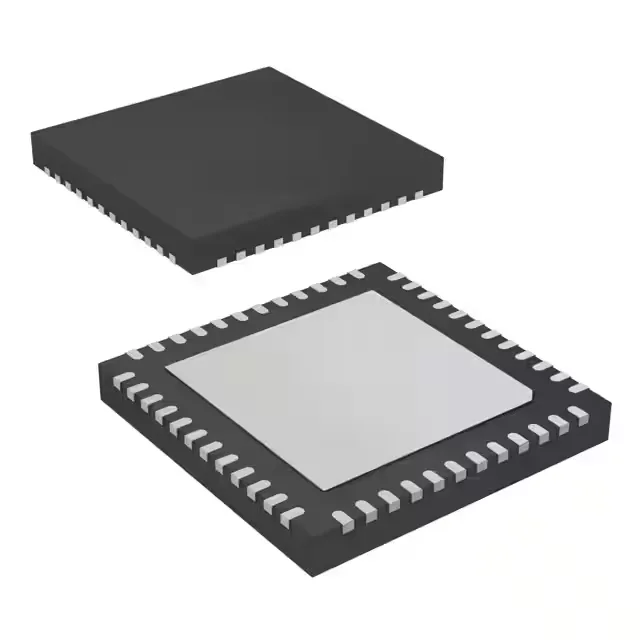
Rated for -40 to 85 °C ambient operation — the industrial temperature band covers factory-floor control modules, outdoor sensor nodes, and HVAC controllers without derating. Housed in a 48-VFQFN with exposed pad (7×7 mm body, 0.5 mm pitch). The brown-out detect and POR peripherals monitor the supply and hold the core in reset until the voltage is stable.
Active lifecycle — sourcing posture
The base product number MSP430F5508 covers multiple package and temperature variants — the IRGZT suffix (48-VQFN, -40 to 85 °C, tape-and-reel) is the most common for production builds.