25 MHz MSP430 CPUXV2 with USB — one chip for sensor-to-host bridging
This part is aimed at industrial sensor nodes, portable medical devices, USB-dongle designs, and any application that needs a single-chip bridge between analog sensors and a USB host.
16 KB Flash — sizing the firmware budget
16 KB of Flash is enough for a USB HID or CDC class driver plus a modest application loop, but leaves little headroom for a full USB composite device or a large protocol stack. If your firmware already runs on a 32 KB part in the same family, the MSP430F5505IRGZT is a cost-down target only if the code fits — verify the.text and.rodata sections before committing the BOM line.
USB 2.0 plus serial — replaces a separate bridge IC
The integrated USB 2.0 controller, combined with I²C, SPI, and UART ports, lets this MCU talk directly to a PC or host processor while also managing local sensors and actuators. That eliminates a dedicated USB-to-UART or USB-to-SPI bridge chip, saving about $0.50–$1.00 in BOM cost and reclaiming board area. The 31 general-purpose I/O pins are enough to interface with a keypad, small display, or a handful of digital sensors alongside the USB connection.
This reduces supply-chain risk for designs that will run for several years.
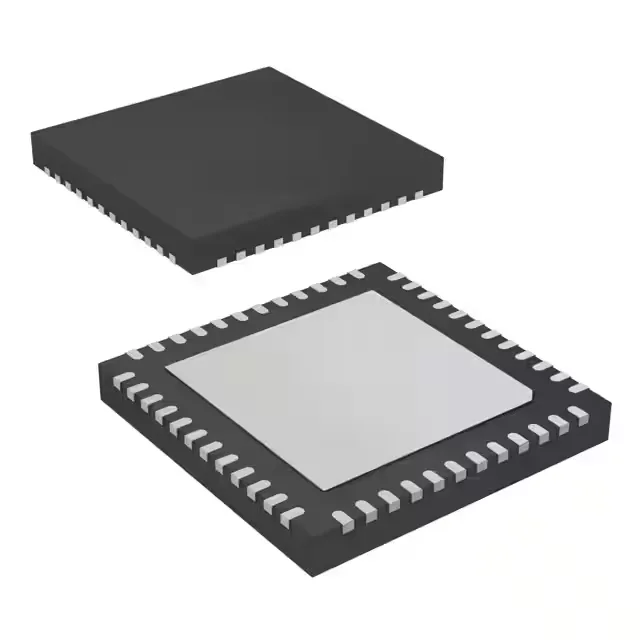
48-VQFN package — thermal and layout notes
The 31 I/O pins are routed on a 0.5 mm pitch, so a 4-layer board with microvias is not mandatory, but a solid ground plane under the QFN is recommended for signal integrity, especially with USB running at 12 Mbps.