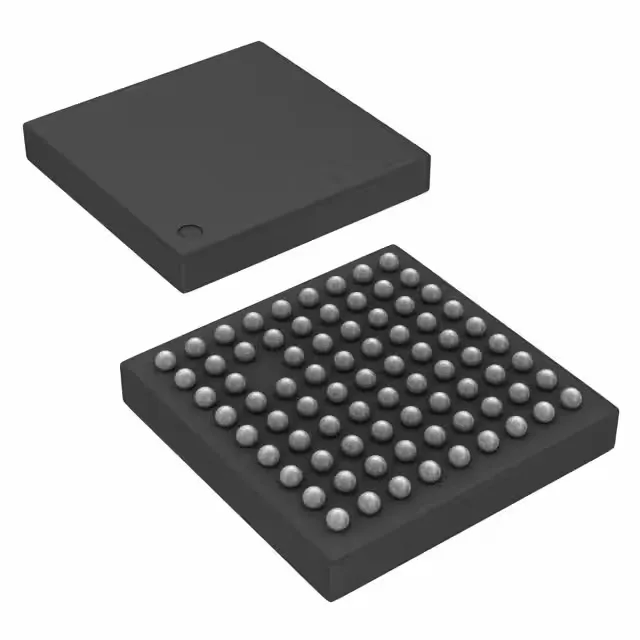
Texas Instruments MSP430F5310IZQE — Microcontrollers & Processors (MCU / MPU / DSP)

TI MSP430F5310IZQE 16-bit MCU, 25MHz, 32KB Flash, 80-BGA

MPNMSP430F5310IZQE
Obsolete

Texas Instruments MSP430F5xx series MSP430F5310IZQE, 16-bit MCU with MSP430 CPUXV2 core at 25MHz, 32KB FLASH, 6KB RAM, 47 I/O, I²C/SPI/UART/LIN/IrDA connectivity, 1.8V to 3.6V supply, -40°C to 85°C, 80-BGA MICROSTAR JUNIOR (5x5) package.

Sourced new & surplus through independent channelsAuthenticity-screened · ESD-safe packingListing updated Jul 2026

Specifications

MSP430F5310IZQE specifications
ParameterValue
SeriesMSP430F5xx
MountingSurface Mount
Oscillator typeInternal
Program memory typeFLASH
Voltage - supply (Vcc (Vdd))1.8V ~ 3.6V
Operating temperature-40°C~85°C(TA)
Speed25MHz
PackageTray
RAM size6K x 8
Core size16-Bit
PeripheralsBrown-out Detect/Reset, DMA, POR, PWM, WDT
ConnectivityI²C, IrDA, LINbus, SCI, SPI, UART/USART
Number of i (O)47
Core processorMSP430 CPUXV2
Case80-VFBGA
Data convertersA/D 12x10b
Program memory size32KB (32K x 8)

Product details

Sourcing now runs through the independent distribution channel, where we qualify available inventory against date-code provenance and manufacturer markings before quoting. An RFQ is the right next step to confirm current availability and pricing — the market for this part is finite and lot-dependent.

25 MHz CPUXV2 core — real-time loop headroom

The 25 MHz clock on the MSP430 CPUXV2 16-bit core gives a deterministic instruction-execution cadence typical of the MSP430 architecture — single-cycle on register operations, a few more on memory accesses. For control loops like sensor fusion, motor commutation, or protocol parsing at moderate baud rates, this keeps worst-case interrupt latency predictable without needing a cache or prefetch buffer. The 32 KB Flash and 6 KB RAM pair support firmware images that fit in the lower-density MSP430 tier; if your current codebase exceeds 28 KB of code or needs more than 5 KB of runtime data, the memory budget is tight and a migration to a larger member in the MSP430F5xx family would be needed.

80-ball BGA Microstar Junior — footprint reality

The 47 I/O lines fan out through the ball array; PCB breakout requires micro-vias or via-in-pad for a four-layer board. This is not a hand-solderable package — rework needs a hot-air station with a BGA nozzle and a stencil for reballing.

The 12-channel 10-bit ADC covers basic analog sampling for temperature, current, or voltage monitoring without an external converter.

Frequently asked questions

What is the replacement for MSP430F5310IZQE?

Texas Instruments has not published an official direct-replacement order code for this part. The MSP430F5xx family includes pin-compatible density variants (e.g., MSP430F5310IYFF in a different package), but no single drop-in replacement has been designated. A parametric search across the MSP430F5xx series at the same 80-BGA footprint and 25 MHz core speed is the practical route — expect a board-level qualification if the Flash/RAM size or peripheral set changes.

What is the difference between MSP430F5310IZQE and MSP430F5310IYFF?

The MSP430F5310IYFF is a different package variant — the IYFF suffix indicates a DSBGA package (die-size ball grid array) versus the IZQE's 80-VFBGA Microstar Junior. The core, memory, and peripheral sets are identical across the two order codes, but the footprint and reflow profile differ. They are not pin-compatible without a board redesign.