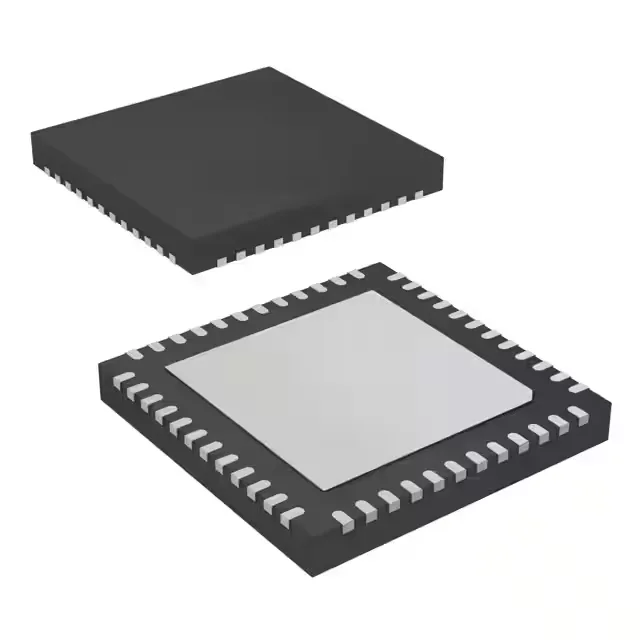
The Texas Instruments MSP430F5309IRGZR is a 16-bit MSP430 CPUXV2 microcontroller in the MSP430F5xx series, clocked at 25 MHz. Supply range is 1.8 V to 3.6 V, and the operating temperature covers -40°C to 85°C — the industrial grade that suits factory-floor controllers, outdoor telecom nodes, and automotive body-electronics modules.
25 MHz core — timing budget for control loops
At 25 MHz, the CPUXV2 pipeline handles sensor fusion loops at a few kilohertz or bit-banged protocols. The 6 KB RAM holds data buffers for UART or SPI streams without external memory.
The I²C, SPI, and UART interfaces can operate simultaneously — the USCI modules are independent, so you can talk to an I²C sensor while the SPI bus handles a display and a UART carries debug output. LINbus support makes this part a natural fit for automotive sub-networks like door modules or seat controls. The 8-channel 10-bit ADC samples at rates sufficient for battery monitoring or analog sensor inputs.