The 128 KB Flash (128K x 8) is sized for a moderate-complexity control stack — bootloader, RTOS kernel, application code, and a parameter table — without needing external memory. The 32 KB x 8 SRAM provides enough workspace for a few kilobytes of sensor data buffers, a communication packet queue, and stack frames for interrupt-heavy code. If your firmware image exceeds 128 KB or you need more than 32 KB of runtime data, you are looking at a larger member of the MSP430F5xx family or a 32-bit Cortex-M part.
25 MHz CPUXV2 core — throughput for control loops and protocol handling
The 25 MHz clock rate on the MSP430 CPUXV2 core delivers roughly 25 MIPS for register-to-register operations. That is enough headroom for a 10 kHz current-control loop with a few PID terms, or for bit-banging a custom serial protocol at 1 Mbps. For comparison, a 32-bit Cortex-M0+ at 48 MHz would offer higher throughput, but the MSP430's 16-bit RISC architecture keeps code density tight and active current lower — a trade worth making when the BOM is power-budget constrained.
The PWM channels can drive a small BLDC motor or a switched-mode power supply auxiliary rail. The DMA engine offloads the CPU for memory-to-peripheral transfers — useful for streaming ADC data to SRAM without interrupt overhead. The brown-out and POR circuits eliminate external reset supervisor ICs in many designs.
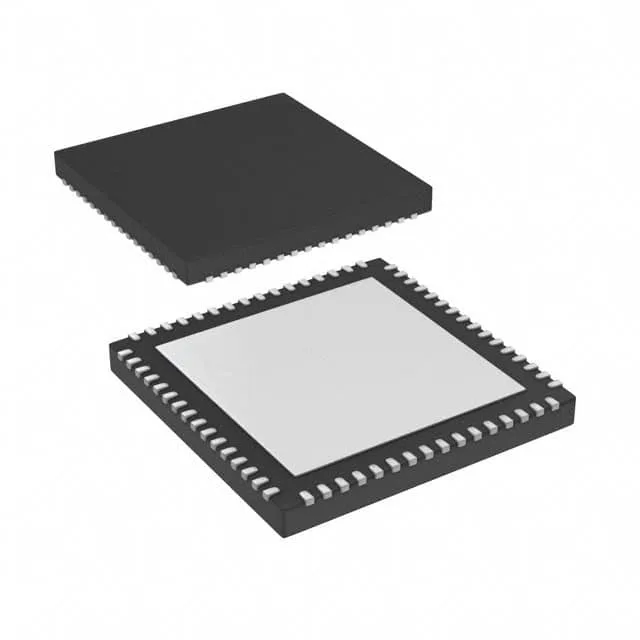
64-VQFN exposed-pad package — layout and thermal considerations
The 64-VFQFN exposed-pad package (9x9 mm body) requires a thermal-land pattern on the PCB with via stitching to the ground plane. Without adequate thermal vias, the junction temperature rises faster under continuous 25 MHz operation, especially in a 85°C ambient. The exposed pad also serves as the primary GND return for the core and I/O — a poor solder joint here can cause intermittent brown-out resets. Use a 2x2 or 3x3 via array with 0.3 mm drill holes, tented on the bottom side to prevent solder wicking.
The base product number is MSP430F5258, and the series is the MSP430F5xx family, which remains a current portfolio for TI.
Because the part is active and not subject to allocation or LTB deadlines, lead times are generally manageable — but the exact lead time and price depend on the quantity and date-code requirements of your BOM line. Submit an RFQ for a firm quote tailored to your production schedule.