25 MHz CPUXV2 — throughput and code density
The 25 MHz MSP430 CPUXV2 core delivers 16-bit RISC performance with a hardware multiplier, single-cycle data access, and a 7-stage pipeline. For control-loop applications — motor commutation, sensor fusion, or real-time PID — the 25 MHz clock keeps loop times under 5 µs with moderate code. The 128 KB Flash is organized as 128K x 8, which is enough for a full application stack including a small RTOS, communication protocol stacks, and application logic. The 32 KB RAM (32K x 8) supports moderate data buffering, but if your design needs dynamic memory allocation or large frame buffers, budget headroom carefully.
80-BGA MICROSTAR JUNIOR — footprint and assembly reality
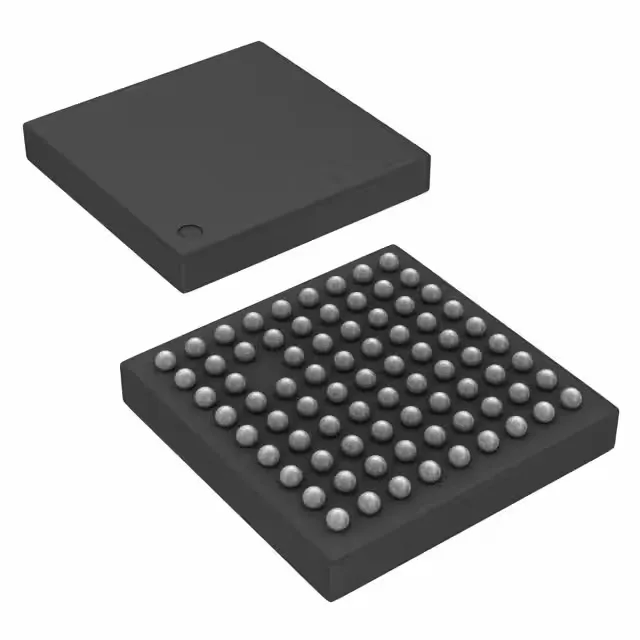
This part comes in an 80-VFBGA package, specifically the MICROSTAR JUNIOR (5x5 mm) variant. It is a fine-pitch BGA — not hand-solderable with a standard iron. Assembly requires a solder-paste stencil, a reflow oven with a controlled profile, and post-reflow X-ray inspection to verify ball wetting and detect voids. The package is surface-mount only.
The MSP430F5255IZQER is officially marked as Obsolete by Texas Instruments. The only viable sourcing path is through independent distributors and the broker market, where inventory is limited to existing stockpiles. TI does not list a direct replacement in the lifecycle record.