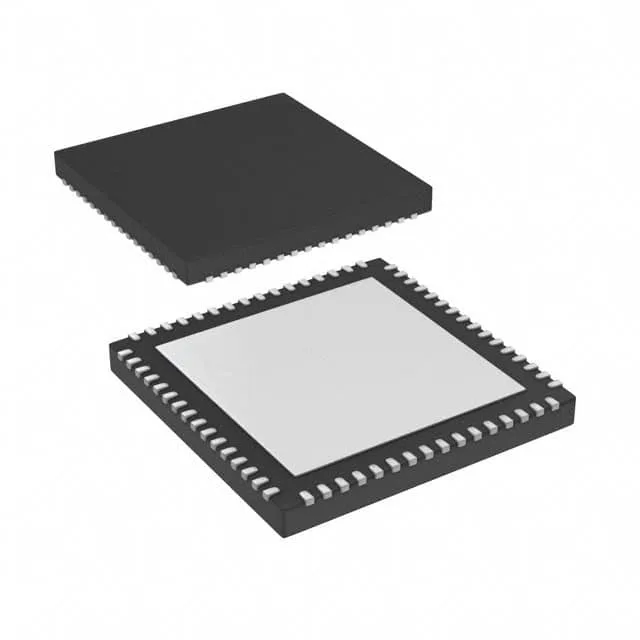
Texas Instruments MSP430F5253IRGCR — Microcontrollers & Processors (MCU / MPU / DSP)

Texas Instruments MSP430F5253IRGCR 16-bit MCU, 25 MHz

MPNMSP430F5253IRGCR
Active

Texas Instruments MSP430F5xx series 16-bit MCU, MSP430F5253IRGCR, 25 MHz CPUXV2 core, 128 KB Flash, 16 KB RAM, 53 I/O, 1.8 V to 3.6 V supply, industrial -40 to 85 °C, 64-VQFN exposed pad.

$4.3430Ref. price · indicative, final on quote
Independent supplier — new & surplus stockAuthenticity-screened · ESD-safe packingListing updated Aug 2026

Specifications

MSP430F5253IRGCR specifications
ParameterValue
SeriesMSP430F5xx
MountingSurface Mount
Oscillator typeInternal
Program memory typeFLASH
Voltage - supply (Vcc (Vdd))1.8V ~ 3.6V
Operating temperature-40°C~85°C(TA)
Speed25MHz
PackageTape & Reel (TR)
RAM size16K x 8
Core size16-Bit
PeripheralsBrown-out Detect/Reset, DMA, POR, PWM, WDT
ConnectivityI²C, IrDA, LINbus, SCI, SPI, UART/USART
Number of i (O)53
Core processorMSP430 CPUXV2
Case64-VFQFN Exposed Pad
Data convertersA/D 10x10b
Program memory size128KB (128K x 8)

Product details

The 25 MHz core speed on the MSP430 CPUXV2 is the practical ceiling for this 16-bit architecture. At that clock the flash controller needs zero wait states for most linear code, so interrupt latency stays predictable — important for the 10-channel 10-bit ADC sampling at speed. If your loop is compute-heavy, budget for the occasional wait state on tight branches.

That is enough headroom for a Modbus stack, a small RTOS, and a sensor-fusion library without squeezing the bootloader. The 16 KB RAM handles a couple of 1 KB data buffers plus the stack; if you need larger frame buffers, step up to the 32 KB RAM variants in the same package.

Rated -40 to 85 °C, this MCU fits factory-floor controllers, outdoor sensor nodes, and automotive cabin modules.

Frequently asked questions

What is the flash size of MSP430F5253IRGCR?

128 KB of program Flash, organised as 128K x 8 bits.

Is MSP430F5253IRGCR compatible with the MSP430F5xx LaunchPad?

The device shares the same MSP430F5xx core architecture and peripheral set as the LaunchPad ecosystem, but the 64-VQFN package is not socketed on the standard 64-pin LaunchPad header. You would need a target board or an adapter for prototyping.