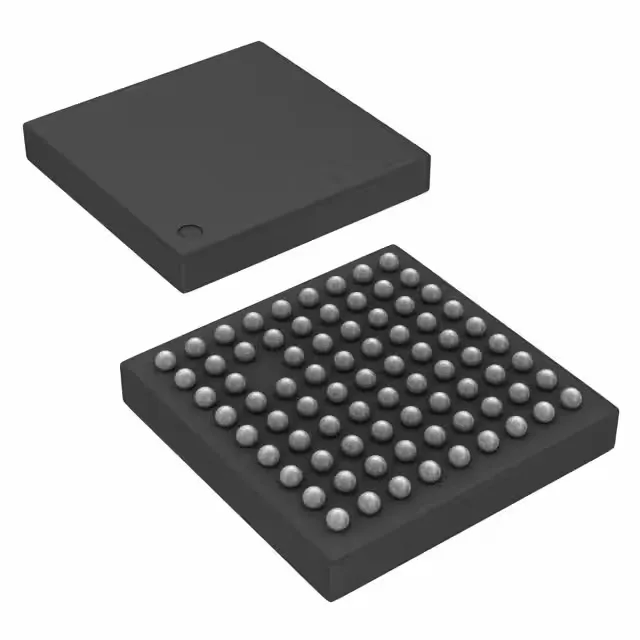
MSP430F5229IZQER — 16-bit MCU in a 5x5 mm BGA
Obsolete — sourcing from the independent channel
The MSP430F5229IZQER has an obsolete lifecycle status. TI no longer manufactures this specific variant through its standard production lines. That means new-design starts should not target this part; production BOM lines still using it must turn to the independent distribution channel for remaining inventory. We source the MSP430F5229IZQER through our multi-supplier network of franchised and independent distributors. Expect date codes to vary — we screen each reel or tray for authenticity and condition before it ships.
The 128 KB of on-chip Flash (organized as 128K x 8) is the entire non-volatile code and constant-data space. For a typical MSP430 application — a sensor node, a handheld controller, or a simple IoT edge gateway — that is enough room for a real-time OS kernel, a protocol stack (e.g., a lightweight TCP/IP or a proprietary sub-GHz radio driver), and the application logic. The 8 KB of RAM (8K x 8) supports moderate data buffering and a small heap; if your design streams audio samples or holds large lookup tables, you will hit the RAM ceiling quickly and need to page data from Flash or move to a part with more SRAM.
25 MHz CPUXV2 — where the cycles go
The 25 MHz core speed is the maximum clock the CPUXV2 can run from the internal oscillator or an external source. At 25 MHz, a single-cycle instruction executes in 40 ns. That is enough throughput for most 16-bit control loops — motor commutation at a few kHz, PID updates at 10 kHz, or polling a sensor bus at 1 MHz — but it is not a DSP-class number. If your algorithm involves heavy 16x16 multiply-accumulate operations at audio rates, budget for software-emulated math or look for a part with a hardware multiplier.
80-ball BGA — footprint and rework realities
The 80-BGA MICROSTAR JUNIOR (5x5 mm) package is a fine-pitch ball-grid array. The 5x5 mm body with 80 balls means the ball pitch is approximately 0.5 mm — this is not a hand-solderable package. Assembly requires a solder-paste stencil, a reflow oven with a controlled profile, and X-ray inspection to verify ball wetting. For rework, a hot-air station with a fine nozzle and a preheat plate is the minimum; the risk of adjacent ball bridging or pad lifting is real.