Operating temperature range spans -40 to 85°C.
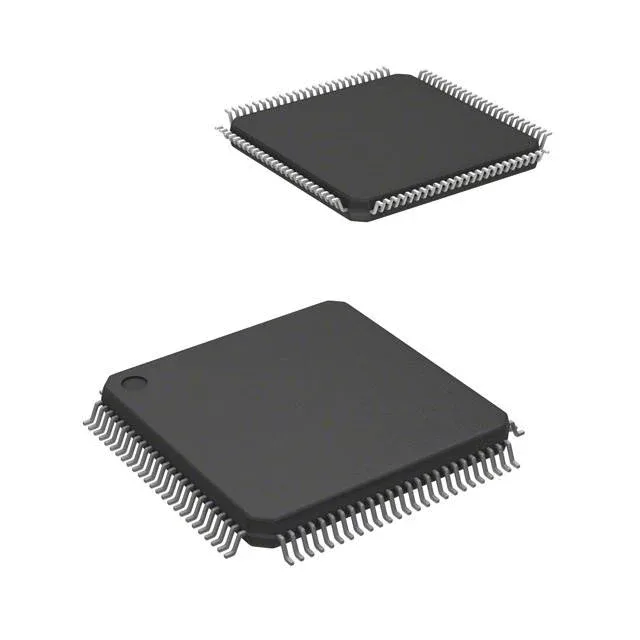
The 16 MHz clock is enough for the LCD scan rate and the 16-bit ADC conversions in a typical metering loop — you're not pushing bus timing margins. The 60 KB Flash holds a modest firmware image with room for a calibration table and a few field-upgrade slots. The 2.5 KB RAM is tight: it forces careful buffer sizing for the LCD frame buffer and the communication stacks. If your application needs more RAM for data logging, you'll want to step up to a sibling with larger SRAM. The 100-LQFP package (14x14 mm) gives 72 I/O lines, enough to interface with a keypad, a few sensors, and a parallel LCD data bus.
Integration note
Brown-out reset and POR are on-chip. The 4x16-bit ADC inputs are multiplexed internally.