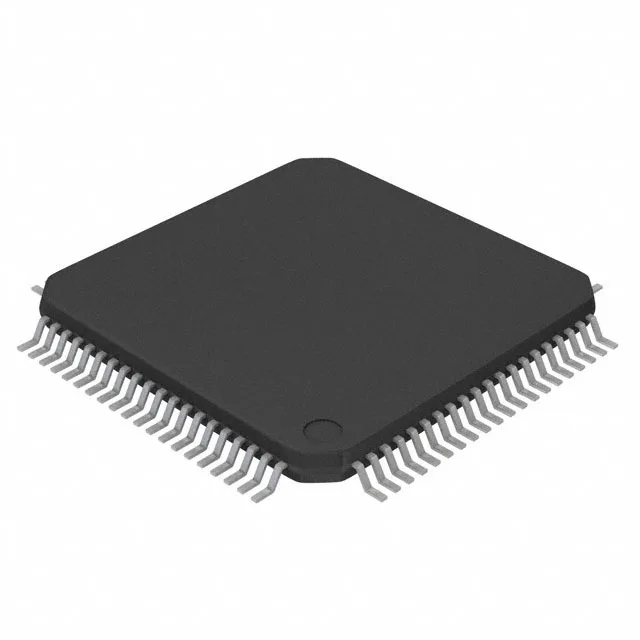
16-bit MSP430 with integrated LCD driver — active and available
It runs at 8 MHz and packs 16 KB of Flash program memory (16K x 8 plus 256 B) with 512 x 8 bytes of RAM — enough for small sensor nodes, handheld instruments, and display-centric designs. Connectivity covers SPI and UART/USART, and the 48 general-purpose I/O pins give room for keypads, sensors, and control lines.
It is ROHS3 compliant. No last-time-buy or phase-out schedule applies.
The 8 MHz clock rate is modest by today's standards, but it is deliberate: the MSP430 architecture is optimised for ultra-low-power operation, not raw throughput. At 8 MHz the CPU can handle real-time sensor polling, LCD refresh, and serial communication without wasting energy. The 16 KB Flash is sufficient for firmware that drives a display, reads a few analogue channels, and communicates over UART or SPI — think a digital multimeter, a thermostat, or a portable blood-pressure monitor. The 512 B RAM is tight; avoid large buffers or dynamic allocation. If your application needs more memory headroom, consider a higher-density MSP430x4xx variant in the same 80-LQFP footprint.
Package and temperature grade — 80-LQFP, industrial range
Housed in an 80-LQFP (12x12 mm) with a surface-mount footprint, the MSP430F435IPNR is a standard fine-pitch QFP that reflows with typical lead-free profiles. It is not AEC-Q100 qualified, so it is not intended for under-hood automotive or engine-bay environments. The 48 I/O pins are 5 V tolerant on most ports, easing interface with legacy 5 V logic.