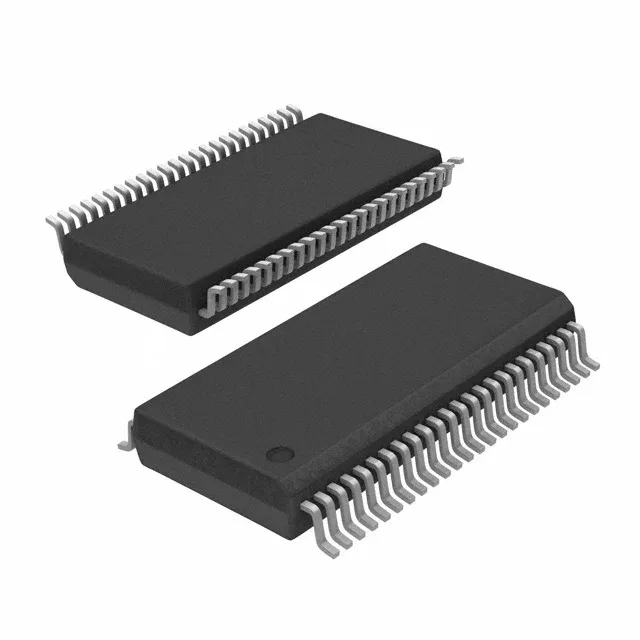
What this MSP430F4250IDL brings to a mixed-signal control board
What sets this part apart for instrumentation and metering designs is the on-chip 16-bit ADC and a 12-bit DAC, letting you handle sensor front-end and analog output generation without external converters.
Integrated ADC and DAC — what it means for signal-chain BOM
The 16-bit ADC and 12-bit DAC are the headline analog features. The ADC resolution (16-bit) gives you enough dynamic range for load-cell, thermocouple, or pressure-sensor conditioning without an external sigma-delta converter. The 12-bit DAC can drive an analog output for valve control or set-point generation. For a calibration technician, the question is long-term drift of the internal reference — TI's MSP430 reference voltage is trimmed, but if your measurement loop demands traceable accuracy over years, you will want to budget an external voltage reference and route it to the ADC's reference input. The DAC output is unbuffered, so plan on an external op-amp if you need to drive a 50-ohm or heavier load.
Package and footprint notes for the layout engineer
It is a surface-mount, gull-wing lead form — standard reflow profile, no exposed thermal pad to stitch. The 32 I/O lines include the LCD segment drive and the ADC/DAC analog pins. Supply decoupling should follow the usual 0.1 µF ceramic per Vcc pin plus a bulk 4.7 µF on the board.