The 8 MHz clock speed is the ceiling for this 16-bit core. For a typical sensor-read-and-update-display loop, that is enough throughput to handle a 100 Hz update rate with headroom. If your application needs faster math or higher PWM resolution, the 8 MHz limit means you will be counting cycles — but for the class of battery-aware instrumentation this part targets, the trade-off in power versus speed is deliberate.
16 KB Flash and 512 B RAM — sizing the firmware
The 16 KB Flash (16K x 8 plus a 256-byte information block) is enough for a modest application stack: bootloader, main control loop, LCD driver, and a few communication protocols. The 512 x 8 RAM is tight — you will need to watch your stack depth and global variable usage, especially if you are buffering display frames or sensor data. The Flash is field-reprogrammable, so firmware updates are possible over the life of the product.
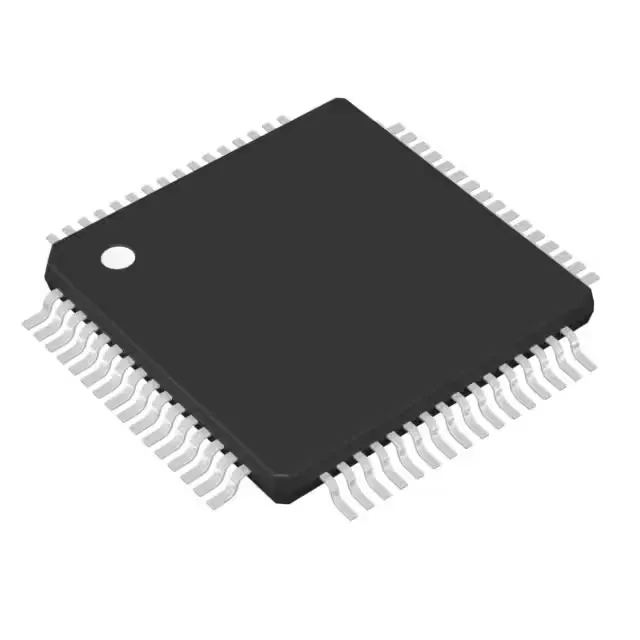
Package and footprint — 64-LQFP
The 64-LQFP (10x10 mm) is a fine-pitch surface-mount package with 48 accessible I/O. Standard reflow profiles for LQFP apply; MSL level is not stated in this listing, so treat as MSL 3 unless the bag label says otherwise.
It is ROHS3 compliant. No official successor has been announced for this exact order code.